 Vancouver
METRO VANCOUVER NEWS
B.C. vehicle crossings into Washington fall as tariff dispute intensifies
Southbound vehicle crossings from B.C. to Washington declined nine per cent in August from a year earlier, according to Whatcom Council of Governments data.
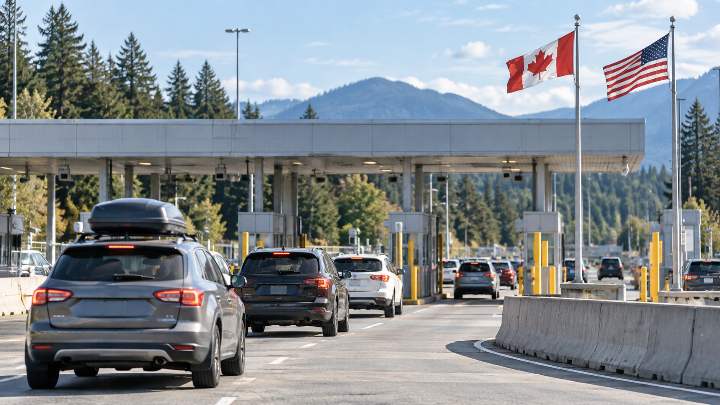
Vehicle crossings from British Columbia into Washington State fell nine per cent in August 2026 from the same month a year earlier, according to the Whatcom Council of Governments’ 2026 Changes in Border Volume data. It was the second consecutive monthly decline, with more than 20,000 fewer personal vehicles travelling southbound.
Compared with 2024, there were more than 120,000 fewer southbound vehicle crossings from B.C. to Washington in August. July 2026 recorded 13 per cent fewer trips than July 2025 and 26 per cent fewer vehicle crossings than July 2024. The data cover vehicle volumes at the Peace Arch, Pacific Highway, Lynden and Sumas ports of entry.
The slowdown in travel from B.C. to Washington began in February 2025. Nearly one million fewer travellers crossed last year, and total vehicle crossings between the Pacific Northwest neighbours fell 36 per cent in 2025.
The summer decline coincided with U.S. President Donald Trump imposing 50 per cent tariffs in July on certain Canadian goods in response to alleged discrimination. On July 20, Trump signed three proclamations under Section 338 of the Tariff Act imposing the tariff on another group of Canadian imports, including hockey sticks and cement. Energy, potash, fish and critical minerals are excluded. A White House statement said the tariffs would hold Canada accountable for continued discrimination against and unreasonable and unequal treatment of U.S. commerce, and referred to Canadian tariffs on automobiles imported from the United States.
In August, Prime Minister Mark Carney announced that Canada would match new U.S. tariffs dollar for dollar and introduce $7.5 billion in new and enhanced measures to support Canadian workers and businesses. The Department of Finance Canada said U.S. proposed terms were not in Canada’s best interest.
Trevor Tombe, an economics professor at the University of Calgary, recently estimated the tariffs could cost 90,000 Canadian jobs. Writing for The Hub, he said Ontario, Quebec and B.C. could bear most of those losses.