 Vancouver
METRO VANCOUVER NEWS
Coquitlam landlord loses lawsuit against insurance broker after fire destroys building
A B.C. Supreme Court judge dismissed Kulwinder Kaur Sanghera’s claim against Gold Key Insurance Services, finding she had not proved the broker breached a duty or that the fire caused the rental-income and sale-price losses she claimed.
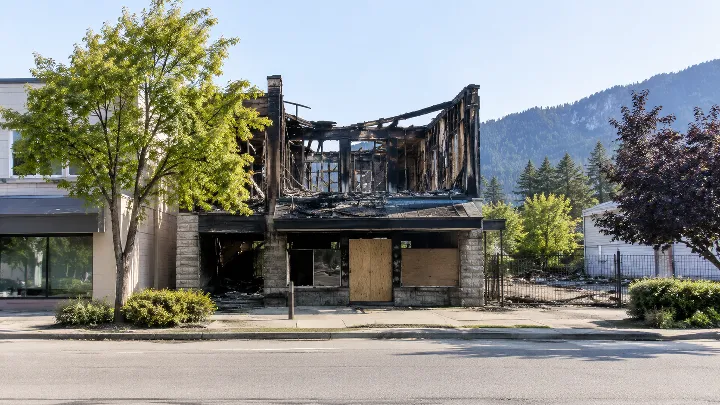
Coquitlam landlord Kulwinder Kaur Sanghera has lost her lawsuit against Gold Key Insurance Services Ltd. over insurance for a building on Clarke Road that was largely destroyed by fire. In a Sept. 25 decision, B.C. Supreme Court Justice Simon Coval dismissed the claim, finding Sanghera had not proved that insurance representative Sukhdarshan Sandhu was negligent or that she suffered the financial losses alleged. Sanghera claimed Sandhu failed to obtain appropriate coverage for her commercial rental property at 513 Clarke Rd.
The dispute arose from a March 2014 fire that destroyed most of a two-storey house. The building had been converted from a residential rental into part of an automotive repair business. It was insured under a residential dwelling policy issued by Wawanesa Mutual Insurance Company, which denied coverage after the fire because the property was being used commercially.
Sanghera and her husband, Jagjit Sanghera, said they had told Sandhu, their longtime insurance representative, years earlier about the property’s rezoning and change in tenancy. They claimed inadequate insurance cost them about $70,000 in rental income and another $100,000 through a lower sale price. Coval found the evidence did not establish that Sandhu had been told of the changes or failed to meet his professional responsibilities. He agreed with Gold Key that the couple had proved neither a breach of Sandhu’s duty of care nor losses resulting from the lack of coverage.
According to the judgment, the Sangheras bought the property around 2003 and initially rented the two-storey house to a family. They also owned the adjacent property and several other residential and commercial properties in Coquitlam, including a pizza restaurant on the same stretch of Clarke Road. In April 2006, Sandhu arranged insurance for 513 Clarke Road by adding it to an existing residential rental policy covering another property on Farrow Street. The property was rezoned for commercial use later that year. The residential tenants stayed for about six months before the property was leased to an automotive business already operating next door. By March 2007, Trinity Auto Center was using the building as an office, storage facility and auto repair shop.
The Sangheras maintained that Jagjit called Sandhu twice to report the changes: once after learning of the rezoning and again when the automotive business moved in. Jagjit testified that Sandhu agreed to update the coverage and take photographs for a new application. Sandhu denied receiving either call. The couple also argued that the commercial use should have been apparent because Sandhu regularly visited their nearby pizza restaurant and drove past the property. Coval rejected that argument, finding the building still looked like a residential home and a passerby could reasonably have thought the automotive activity was confined to the neighbouring property.
After the March 2014 fire, Sandhu submitted an insurance claim to Wawanesa. The insurer denied coverage on March 21, saying it had not been told the building was rented to a commercial enterprise. Wawanesa said it would not have insured the property had it known it was being used as an automotive dealership and repair facility. The company later voided the combined policy for the Clarke Road and Farrow Street properties retroactive to March 2007 and refunded $11,445 in premiums paid after the change in use.
Sanghera initially sued both Wawanesa and Gold Key, but agreed to dismiss her claim against the insurer in February 2024. The Gold Key case went to trial in New Westminster in September 2026. In dismissing it, Coval pointed to several inconsistencies in the couple’s testimony about whether Sandhu had been informed of the commercial use. Jagjit testified at trial that he had called twice, but had previously said during an examination for discovery that he had made only one call. Kulwinder also gave conflicting accounts of when the conversation happened and whether her husband used a cellphone or landline.
Coval considered it unlikely Sandhu would knowingly have failed to update the policy after learning of the commercial tenancy, particularly because more expensive commercial coverage would have brought higher premiums and commissions. The judge also found Jagjit, an experienced commercial and residential property owner, likely understood that the policy had never changed. “I therefore find that he knew that the policy change was never made,” Coval said. The judge accepted Sandhu’s evidence that, after the fire, Jagjit questioned why commercial coverage was needed when the building itself remained a residential house. Coval concluded that the remark explained why the couple had not switched to more expensive commercial coverage.
The court also rejected the argument that Sandhu should have regularly inspected the property or asked about changes during annual renewals. It said the allegation had not been properly raised in the lawsuit and would have required expert evidence about the standards expected of insurance representatives.
The court separately found the Sangheras had not established financial losses from the insurance dispute. At the time of the fire, the family was selling both Clarke Road properties for about $7 million. Jagjit testified that the buyer later negotiated a $90,000 to $100,000 reduction because of the destroyed building. The couple also claimed lost rent of $5,775 a month for six to nine months. However, the court heard the automotive business had stopped paying rent several months before the fire because of financial difficulties.
The Sangheras did not produce documents to support the alleged losses, including the commercial lease, rent-payment records, purchase and sale agreements, communications with the buyer and repair invoices. Coval said those records were needed to determine whether the fire had actually led to a lower sale price or lost rental income. The judge noted the buyer might not have reduced the price at all if the property was intended for redevelopment and the existing building was not needed. Coval said it would be unfair to Gold Key to find the plaintiff had proved the alleged losses without disclosing those key documents as required by procedure.
The lawsuit was dismissed, with Gold Key awarded its legal costs, subject to any further submissions from the parties.