 Vancouver
METRO VANCOUVER NEWS
French and Swiss firms to build VIA Rail cars and locomotives in $6.7-billion fleet overhaul
Alstom Canada will supply 313 passenger cars for VIA Rail’s long-distance, regional and remote routes, with service expected to begin in 2031 and the full order in service by 2035. A separate Stadler order for 45 hybrid battery-diesel locomotives brings the fleet renewal’s combined value to about $6.7 billion.
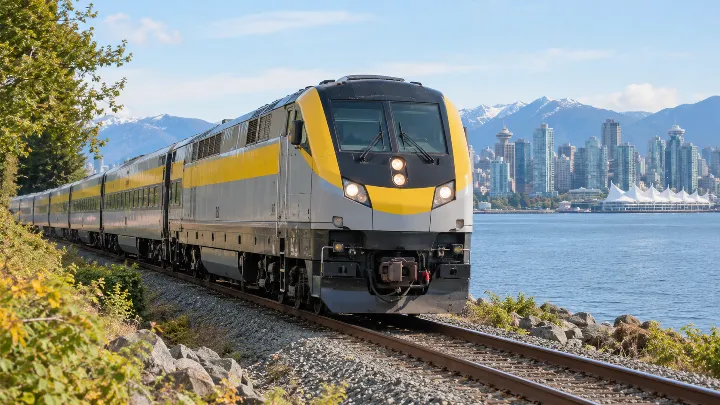
VIA Rail is replacing its long-distance, regional and remote (LDRR) fleet through contracts with French train maker Alstom’s Canadian division and Swiss manufacturer Stadler. Alstom Canada will supply 313 passenger cars. The first are expected to carry passengers in 2031, with the entire order in service by 2035. The Government of Canada is investing more than $4.7 billion in passenger cars and long-term support. According to Alstom Canada, its agreement includes about $4 billion for the cars and nearly $700 million for 15 years of technical support and spare parts. It does not include the separate Stadler locomotive contract; together, the Alstom and Stadler contracts are worth about $6.7 billion.
Alstom Canada is the Canadian division of French manufacturer Alstom, which bought Canadian-based Bombardier’s train-making division in 2021. Alstom Canada has major manufacturing facilities in southern Ontario and Quebec and is also building trains for Toronto’s subway and Vancouver’s SkyTrain. Prime Minister Mark Carney said VIA’s passenger cars would be built in Canada for the first time in four decades. He said the work would mean contracts for Canadian suppliers, jobs for workers and paycheques staying in Canadian communities.
VIA Rail’s existing fleet averages about 77 years old, and much of its equipment is nearing retirement. The company previously told Daily Hive Urbanized that the LDRR fleet is the oldest active train fleet in North America, with many cars built between 1947 and 1955. VIA Rail and the federal government first announced a plan to replace more than 300 LDRR passenger cars and locomotives in summer 2024. A subsequent bidding process selected Alstom Canada.
The new cars will serve routes connecting nearly 400 communities. The LDRR network spans about 12,500 kilometres across eight provinces and carried more than 216,000 passengers in 2025. Its routes include Vancouver–Toronto (The Canadian), Prince Rupert–Jasper, Winnipeg–Churchill, Sudbury–White River, Montreal–Senneterre, Montreal–Jonquiere and Montreal–Halifax. The Canadian, a 4,466-kilometre route between Vancouver and Toronto that takes four days and four nights, marked its 70th anniversary in 2025. It launched in 1955 using the same fleet.
Alstom Canada’s order covers nine car types, from seating for shorter trips to private sleeping accommodations for overnight journeys. The overhaul is intended to improve comfort, accessibility and onboard technology while retaining familiar features such as dome cars, dining facilities and sleeping accommodations. VIA Rail interim president and CEO Mathieu Paquette said the cars would retain dome cars, full-service dining and social areas while adding modern amenities, better accessibility and greater reliability. He said they would help preserve essential services to remote communities and maintain the distinctive experience of discovering Canada by train.
The order includes 58 coach cars, 78 sleeper cars, 26 accessible sleeper cars, 20 Prestige sleeper cars, 38 panorama cars, 25 dome cars, 20 dining cars, 19 berth cars and 29 baggage cars. VIA Rail will continue to offer its Economy, Sleeper Plus and Prestige service classes. Each class is to have accessible spaces, with a connected route between cabins, washrooms, dining facilities and other key amenities.
Design and testing requirements call for the cars to withstand temperatures from -50°C to 50°C. At least 90 per cent of their materials must be recoverable when the cars are retired. Other planned features include improved insulation, efficient lighting, lower water use, and onboard facilities to sort recyclables, organic waste and garbage.
The cars will be designed and engineered at Alstom’s Saint-Bruno-de-Montarville facility in Quebec. Their bodies will be manufactured in La Pocatiere, Quebec, and final assembly will take place in Thunder Bay, Ontario. Alstom estimates the contract will create or support up to 670 direct jobs in its Canadian operations, in addition to jobs among suppliers and other businesses. The company projects a contribution of more than $1.6 billion to Canada’s GDP.
The passenger-car purchase is part of a wider LDRR fleet replacement. In July 2026, the federal government announced a separate $1.6-billion programme for 45 hybrid battery-diesel locomotives from Stadler, including 20 years of technical support and spare parts. Another $357 million will fund a new assembly and maintenance facility in Montreal, bringing Stadler’s total contract value to about $1.95 billion. The combined value of the Alstom and Stadler contracts puts the full LDRR overhaul at about $6.7 billion.
The locomotives will use battery systems supplied by ABB’s Saint-Laurent facility in Quebec. The systems are intended to reduce fuel consumption and allow battery-only operation in certain situations, including at stations and environmentally sensitive areas, to significantly reduce noise and exhaust emissions. The battery will also provide backup power to help a locomotive reach a safe location in the unlikely event of a diesel powertrain failure. The locomotives can also use renewable diesel. They will be capable of speeds up to 160 km/h, with improved acceleration and performance on steep slopes.
The first locomotives are expected to enter passenger service in 2029, with the full fleet operating by 2032. The Montreal facility is also scheduled for completion in 2029. It will handle final assembly, testing and preparation for service for up to 36 locomotives, followed by long-term maintenance. The passenger cars will arrive later and enter service gradually alongside VIA Rail’s existing fleet, allowing trains to keep operating as older cars are replaced through 2035.
The programme follows federal funding in 2018 for VIA Rail to acquire Siemens Venture trains for the southern Ontario–Quebec corridor between Windsor and Quebec City, via Toronto and Montreal. VIA Rail ordered 32 five-car trainsets, or 160 cars, for $1 billion. The first new train entered service in late 2022 and the last delivery was made in 2025. The trains were initially acquired for a planned high-frequency rail service on the Windsor–Quebec City corridor, with more frequent and reliable service at speeds up to 200 km/h.
The high-frequency rail concept has since been abandoned in favour of Alto, the federal government’s high-speed rail project on a route of more than 1,000 kilometres between Toronto and Quebec City. Trains are planned to run at up to 300 km/h or more. A federal Crown corporation separate from VIA Rail has been created to oversee Alto. After a bidding process, the government selected private consortium Cadence to plan, design, build, operate and maintain the project, and help finance it.
Cadence is a joint venture that includes SNCF Voyageurs, the French government-owned operator of France’s high-speed rail network; French transportation engineering firm SYSTRA; Canadian institutional investor La Caisse, formerly CDPQ and backed by the Quebec pension fund; Canadian engineering firm AtkinsRealis, formerly SNC-Lavalin; and Air Canada. La Caisse and AtkinsRealis are also involved in the public-private projects for Vancouver’s SkyTrain Canada Line and Montreal’s REM metro network. Alto’s first phase between Ottawa and Montreal could begin construction as early as 2029 and reach completion in 2038. The remaining phases could be completed in the 2040s. Cadence would be the system’s long-term operator.
Last month, Alberta launched a similar bidding process, seeking a private-sector proponent to design, build, operate and maintain, and partially finance a high-speed rail line between Calgary and Edmonton. The line would form part of the provincial government’s broader long-term passenger rail vision. Prime Minister Mark Carney has referred both Alto and Alberta’s high-speed rail projects to the federal Major Projects Office to prioritize them and help expedite approvals and planning.
Also last month, Amtrak Cascades, the passenger rail route linking Vancouver, Seattle and Portland, began regular service with new Airo trains, a Siemens Venture variant. The route’s entire fleet is being replaced by Airo trains, and it is the first to benefit from Amtrak’s U.S.-wide order. Washington state is working with the governments of British Columbia and Oregon to explore a cross-border high-speed rail link connecting the Pacific Northwest’s three major cities.