 Vancouver
METRO VANCOUVER NEWS
Air Canada will end its Vancouver–Singapore flights on Jan. 26, 2027
The airline says the route did not meet the financial targets needed to remain sustainable. Its suspension will end Canada’s only nonstop service to Singapore, less than three years after launch.
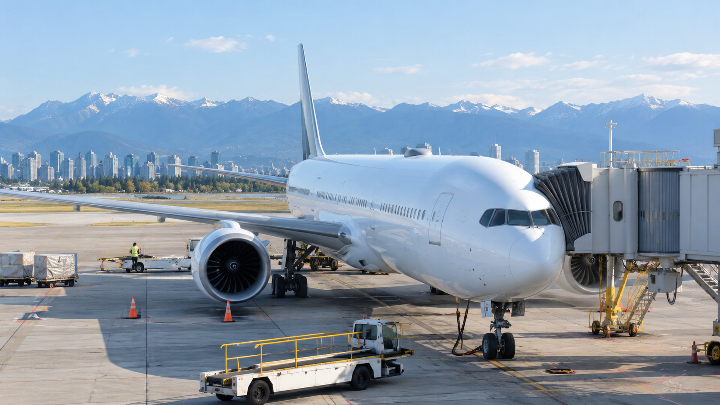
Air Canada will suspend its nonstop service between Vancouver International Airport (YVR) and Singapore Changi Airport (SIN) effective Jan. 26, 2027, less than three years after launching the route. The airline confirmed the decision in response to an inquiry from Daily Hive Urbanized. The suspension will also end Canada’s only nonstop service to Singapore.
Air Canada said the route did not meet the business targets needed to remain sustainable despite significant efforts and resources invested by the airline and its partners over nearly three years. It cited a combination of demand, current fuel costs — especially since the U.S.-led war in Iran began — and the 12,818-kilometre flight distance. The route is YVR’s longest. Flights from Vancouver to Singapore take about 17 hours; the return takes approximately 14 hours because of wind direction. The airline said the fuel requirements for journeys of this length make them less efficient and harder to operate profitably.
The airline said it chose to keep the service running until the new year, after the busy Christmas travel season, to limit the effect on customers. It said the end date was set far enough in the future to protect most customers.
The route began on April 3, 2024, as Canada’s only nonstop connection to Singapore, with four weekly flights in each direction on Boeing 787-9 Dreamliners. Air Canada’s service was intended to provide a permanent replacement for Singapore Airlines’ short-lived route during the pandemic. Singapore Airlines announced in February 2023 that it would withdraw its YVR service in October 2023. The route had launched in December 2021, with three flights a week. Singapore Airlines launched nonstop service to Seattle-Tacoma International Airport in 2019 and still serves the Pacific Northwest. It previously flew between Vancouver and Singapore until 2009, when it cancelled the route amid the effects of the 2008 global financial crisis. At the time, it operated three flights a week with a stop in Seoul.
Beyond serving travellers going to Singapore, SIN is one of the world’s busiest and most connected airport hubs, with transfers to destinations across Southeast Asia, India and Australia. Changi Airport is also a destination in its own right. It had received the Skytrax World Airport Awards’ best airport in the world title 14 times in total as of 2026. Opened in 2019, Jewel is a large shopping and entertainment complex beneath a glass dome, centred on the 40-metre Rain Vortex, the world’s tallest indoor waterfall. The waterfall is surrounded by a terraced indoor forest and walking trails. The complex has hundreds of shops and restaurants, gardens and family attractions, and an airport people mover runs through the dome. By comparison, Skytrax named YVR the world’s 10th-best airport in 2026; it has been named North America’s best airport 15 times, including in 2026.
Air Canada’s Singapore service is ending as the airline prepares to add other nonstop routes between YVR and Asia. Resources assigned to the Singapore route will largely remain at YVR and be redirected to other Asian destinations. Last month, the airline announced a permanent, year-round route between YVR and Guangzhou in Mainland China, starting May 4, 2027. The Boeing 787-9 service is scheduled to operate three times a week. Guangzhou will be Air Canada’s third permanent, year-round destination in Mainland China from Vancouver, alongside Beijing and Shanghai.
An expanded air transport agreement announced by the Canadian and Vietnamese governments last month opens the way for direct flights between the countries. It allows each country’s airlines up to 14 weekly passenger flights and seven weekly cargo-only flights. Soon after the announcement, Air Canada said it intends to launch a route to Ho Chi Minh City, Vietnam’s largest city and commercial centre, in 2027. The service remains subject to final government approvals and preparations. The airline has not named the Canadian airport or given a launch date or schedule. Given YVR’s role as Air Canada’s Trans-Pacific hub, Vancouver is highly likely to be the Canadian gateway for the first nonstop route to Vietnam. Vancouver International Airport officials have also lobbied governments in recent years to enable such a route. Air Canada said the decision to end its Singapore service would allow it to redeploy its fleet to markets where demand and other economic factors are better aligned.
Speaking at the Greater Vancouver Board of Trade in April 2026, Vancouver International Airport president and CEO Tamara Vrooman said about 58,000 passengers travelled from YVR to Vietnam in 2025 by connecting through Singapore alone, despite the lack of nonstop service. She said the existing passenger demand through Singapore was already sufficient to support a standalone nonstop route to Vietnam, along with the additional cargo capacity it would provide.
Air Canada and Singapore Airlines are both members of Star Alliance. Code-share agreements will allow Air Canada to continue selling travel to Singapore on partner-operated flights with connections at other airports. The airline cited Singapore Airlines connections through Tokyo Narita International Airport, Seoul Incheon International Airport and Hong Kong International Airport, as well as London Heathrow, Frankfurt and Brussels airports. Air Canada’s partnership with ANA also provides connections through Tokyo Narita and Tokyo Haneda airports.
Air Canada will launch a seasonal nonstop service between YVR and Sapporo, Japan, in December 2026. According to YVR’s latest finalized monthly statistics, the airport handled 2.7 million passengers in July 2026, up 2.6 per cent from July 2025. The source reports 431,000 million Asia-Pacific passengers, up 10.6 per cent year over year — the strongest growth of any market at the airport. If the trend continues, YVR is on pace for a record annual passenger total in 2026. In the first seven months of 2026, it recorded a cumulative 16.1 million passengers, up 3.7 per cent from the same period in 2025. That included 2.94 million Asia-Pacific passengers, a 14 per cent year-to-date increase. After a sluggish post-pandemic restart, the Asia-Pacific market is now leading YVR’s growth by a wide margin.
YVR’s new-flight list for 2025–2027 includes: Jan. 18, 2025, Hong Kong (HKG), Hong Kong Airlines, twice weekly; April 2, Manila, Philippines (MNL), Air Canada, four times weekly; May 1, Nashville, Tennessee (BNA), Air Canada, four times weekly, seasonal; June 3, Tampa, Florida (TPA), Air Canada, twice weekly; June 4, Raleigh, North Carolina (RDU), Air Canada, three times weekly, seasonal; May 11, Austin, Texas (AUS), WestJet, three times weekly, seasonal; July 1, Halifax, Nova Scotia (YHZ), WestJet, four times weekly, seasonal; Oct. 27, Mexico City, Mexico (MEX), Flair Airlines, three times weekly; and Dec. 12, Liberia, Costa Rica (LIR), WestJet, daily, seasonal.
The 2026 entries are Feb. 2, Phoenix, Arizona (PHX), Porter Airlines, daily, seasonal; April 15, Montreal, Quebec (YUL), Flair Airlines, daily, seasonal; June 1, Tokyo, Japan (Narita; NRT), All Nippon Airways, daily, seasonal; Oct. 3, Guanajuato, Mexico (BJX), Flair Airlines, once weekly; Nov. 21, Los Angeles, California (LAX), Delta Airlines, twice daily; Dec. 3, Monterrey, Mexico (MTY), Air Canada, three times weekly, seasonal; Dec. 7, Puerto Escondido, Mexico (PXM), Air Canada, four times weekly, seasonal; Dec. 13, Liberia, Costa Rica (LIR), Air Canada, four times weekly, seasonal; Dec. 15, Mazatlán, Mexico (MZT), Air Canada, daily, seasonal; and Dec. 17, Sapporo, Japan (CTS), Air Canada, three times weekly, seasonal. The 2027 entry is Guangzhou, China (CAN), Air Canada, three times weekly, starting May 4.