 Vancouver
METRO VANCOUVER NEWS
Joly says Stelco could face penalties or forced sale over planned layoffs
Industry Minister Mélanie Joly says Stelco could face financial penalties or a forced sale of its Canadian assets if it proceeds with layoffs of up to 500 workers. Ottawa is reviewing the company’s response to claims it breached binding commitments tied to its acquisition.
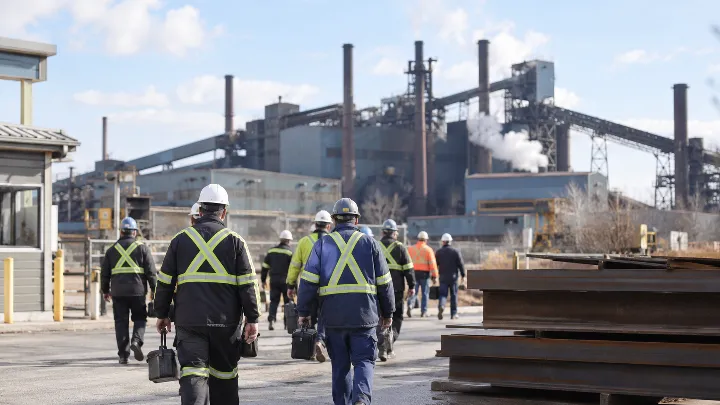
Industry Minister Mélanie Joly said Wednesday that Stelco could face financial penalties or even be forced to sell its Canadian assets if it proceeds with layoffs of up to 500 workers. Speaking to reporters after an event in Ottawa, Joly said the federal government is still working with the company on a solution, but “everything is on the table,” including legal action.
Joly said the government expects Stelco to honour its commitments to Canada and that a business decision or changing market conditions cannot excuse non-compliance. A court process could result in financial penalties, an order requiring the company to meet its commitments, or a forced divestiture, she said. Joly added that she remains open to meeting with the company and wants to keep jobs in Canada.
Stelco’s Oct. 9 letter to Joly responded to a letter she sent on Oct. 5, giving the company five days to reply. Joly’s letter expressed “extreme disappointment” and said the layoffs directly breached commitments under the Investment Canada Act. Stelco president Paul Simon wrote that the company had done nothing wrong and described the federal government’s accusations as “false.”
The Ontario-based steelmaker announced last month that U.S. tariff pressure had led it to concentrate production at its Lake Erie Works plant in Haldimand and halt production at its Hamilton plant. The company said some workers would be offered jobs at the Haldimand facility, but hundreds are still expected to be out of work. U.S. President Donald Trump imposed tariffs of up to 50 per cent on Canadian steel products under Section 232 duties about a year and a half ago; aluminium, autos and other products have also faced tariffs.
In her Oct. 5 letter, Joly said market conditions surrounding Trump’s tariff policies did not release Stelco from its Investment Canada Act commitments. She said the federal government would use the “full force of the law” if the jobs were not preserved. Last week, Joly also argued that Cleveland-Cliffs, the U.S. company that acquired Stelco, could not say tariff-related layoffs were beyond its control because its CEO, Lourenco Goncalves, supports U.S. steel tariffs. “They cannot say that this is now an act of God or force majeure,” she said.
The federal government says Cleveland-Cliffs made several commitments when it acquired the Ontario steelmaker, including preserving jobs and the Stelco name, maintaining and expanding its Canadian operations, generating cost savings, broadening its customer base and supporting unionized steel jobs. In a 2024 release announcing the agreed acquisition, Cleveland-Cliffs said it would “maintain significant employment levels in Canada and Canadian representation on the management team.”
Business lawyer Nassira El Hadri, founder of Hadri Law in Toronto, said the government appears to have moved beyond asking Cleveland-Cliffs to explain the layoffs and is seeking a plan for meeting all its commitments. “They are not asking for an explanation,” she said. “They’re saying, ‘You have to give us a plan on how you are going to comply.’” El Hadri said the undertakings are binding, not goodwill gestures. If the company simply repeats that U.S. tariffs make the layoffs necessary, the dispute could end up in court.
The federal government says the binding undertakings in the 2024 agreement include: continuing to operate under the historic name “Stelco, a Cleveland-Cliffs Company”; keeping Stelco’s head office in Hamilton, responsible for day-to-day operations; continuing to employ at least as many unionized employees and the vast majority of non-unionized employees as when the transaction was announced; honouring existing collective bargaining agreements and employee benefit and pension commitments; making significant capital and research and development expenditures to support Stelco’s operations; and ensuring Scope 1 and Scope 2 greenhouse gas emission intensity does not increase and remains at least 25 per cent below the global average for integrated steel mills.
In his seven-page Oct. 9 letter, Simon said exports of cold-rolled and coated steel to the United States had fallen 58 per cent from pre-trade-war levels as foreign imports continued to undercut Canadian-made steel. He said Stelco had been open with the federal government for months about its difficulties. Meetings in early September with several senior officials, including representatives from Joly’s office, led the company to believe the government understood the market conditions affecting the finishing lines at Hamilton Works.
Simon’s letter said Stelco submitted its annual report in November 2025 confirming compliance with its employment undertakings. The report cited significant challenges from the unforeseen consequences of unprecedented U.S. tariffs and Canada’s failure to advance an effective “Fortress North America” trade regime. Simon called Joly’s assertion that the planned layoffs breached the undertakings false, arguing that the commitments did not prohibit layoffs. He described an industry disrupted by U.S. tariffs, weakening demand and continued foreign steel imports, and said producing cold-rolled and coated products would mean unsustainable losses. “As such, we will continue with the idling of Hamilton Works,” he wrote.
Over the weekend, Joly said in a social media post that she had received Stelco’s letter and reiterated the government’s position. The Government of Canada continues to expect Stelco to meet its legally binding commitments to employees, she said; those commitments were made under the Investment Canada Act and do not cease to apply because of a change in business strategy or market conditions. Joly said the government’s legal team was reviewing the letter and that all options remained on the table.