 Vancouver
METRO VANCOUVER NEWS
Imperial Oil medical privacy grievance at Ioco terminal dismissed on jurisdictional grounds
An arbitrator found Unifor Local 601’s challenge to disability-benefit medical consent forms cannot proceed through labour arbitration because the plan is outside the collective agreement.
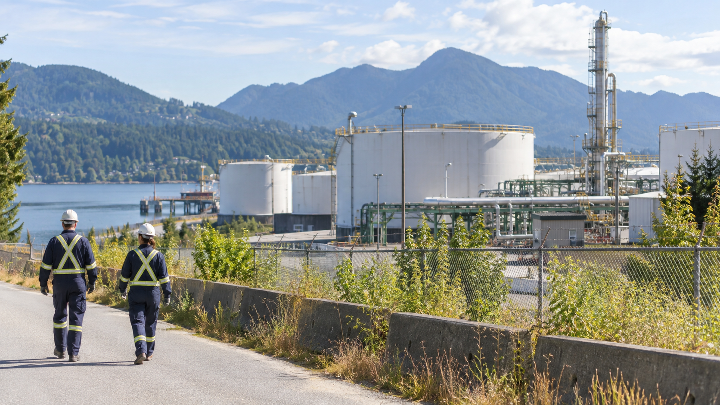
A labour arbitrator has dismissed Unifor Local 601’s policy grievance over medical consent forms required for temporary disability benefits at Imperial Oil’s Ioco distribution terminal in Port Moody.
In an Aug. 7 decision, Randall J. Noonan ruled that he lacked jurisdiction because the disability plan is not part of the collective agreement covering the terminal’s 17 unionized employees, many of whom work in safety-sensitive positions. The ruling does not decide whether the forms comply with B.C. privacy law.
Imperial Oil funds temporary disability benefits for employees across Canada, whether unionized or not, while Telus Health administers claims and return-to-work planning. Employees absent for more than five workdays or 40 hours, whichever is shorter, must complete an Attending Physician Statement and Consent Form. Those who decline may remain off work for medical reasons without discipline, but do not receive temporary disability benefits and may have previously advanced sick pay recovered.
The forms request information including diagnoses, test results, symptoms, medications, treatment and hospital admissions. They also permit health information to be exchanged among Telus, Imperial Oil’s occupational health division and medical providers. A provision allows Telus to provide Imperial Oil with an employee’s complete short-term disability file, including medical documents, if a grievance, lawsuit or human-rights claim arises.
Unifor filed its grievance in April 2024, initially including employee Chris Brown, who declined to sign the forms because he considered them overly intrusive. He was denied benefits and had sick pay already advanced recovered. Imperial Oil later agreed to pay Brown, resolving the individual portion of the grievance.
The union continued its policy grievance, seeking narrower consent forms, removal of the provision allowing Telus to provide full disability files during disputes, and $1,000 in damages for every bargaining-unit employee who had signed the forms since the grievance was filed.
Noonan agreed with Imperial Oil that the plan was an extra-contractual benefit. The collective agreement does not require the company to provide temporary disability benefits, establish a claims process or regulate the medical information needed to obtain them. He said workers challenging the plan may need to use other avenues, including B.C.’s privacy commissioner or the courts.
Noonan said he did not minimize the privacy interests raised by the union, but found they went to the merits of the complaint and the proper forum. Although he agreed that parts of B.C.’s Personal Information Protection Act regulate employment relationships, he found that did not make every workplace privacy dispute arbitrable under a collective agreement.
The decision follows a separate privacy dispute at Ioco. In 2022, Local 601 grieved mandatory medical certification and recertification examinations for safety-sensitive workers, including drug and alcohol testing and broader fitness assessments. That regime is tied to language incorporated into the collective agreement, and an arbitrator has allowed the union’s privacy challenge in that matter to proceed.
Unifor also objected to Imperial Oil raising its jurisdictional objection one week before the February hearing. Noonan found the union had a full opportunity to respond and showed no prejudice, adding that jurisdiction cannot be created through silence, delay, waiver or consent.