 Vancouver
METRO VANCOUVER NEWS
Reflecting with pride on Burnaby’s growth and its Italian Canadian community
As he prepares to leave Burnaby city council after nearly 24 years, a longtime public servant reflects on immigration, multiculturalism and the contributions of Italian Canadians, and urges the next council to listen across the city.
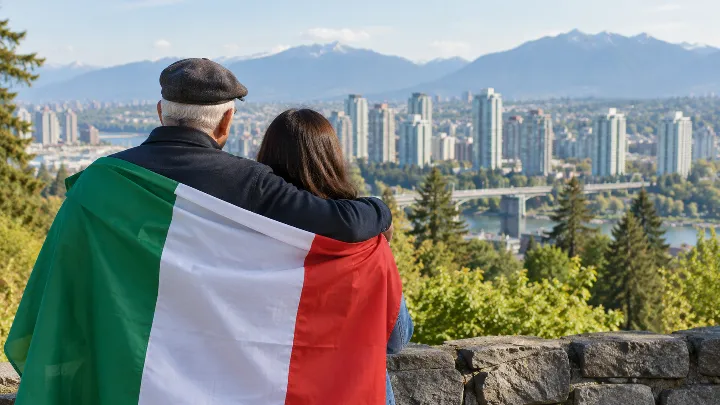
When I came to Canada from Italy in 1959, building a new life here was much harder than it is today. That was true for Italians and for people from many other countries and cultures. Many Italian immigrants arrived with little English and limited formal education, and generally found work in construction, factories and other manual labour because those were the opportunities available. They worked hard, supported their families and sought opportunities for their children that they had not had themselves. Even immigrants with professional qualifications could struggle to advance: language was one barrier, and social attitudes were another. Italians were not always well regarded, nor were immigrants from many other non-Anglo cultures.
Conditions gradually improved. Immigrants learned English and became more familiar with Canadian life. Their children went further in school and entered professions that had largely been closed to the first generation. More people could imagine a future beyond the hard physical work their parents had done. One of the first Italian Canadians I remember thinking had truly made it was Angelo Branca, the son of Italian immigrants. He became a respected lawyer, was appointed to the Supreme Court of British Columbia in 1963 and later joined the BC Court of Appeal. He was also known for defending disadvantaged people and helping Italians who had been interned during the Second World War. At the time, there were not many Italian names in positions like that. Seeing someone from our community reach such heights in the legal profession showed what was possible.
Others followed. Italian Canadians entered health care, law, education, politics and business. Construction was especially important because so many first-generation immigrants gained experience there, built their livelihoods and earned a strong reputation. Families such as the Bosas became major names in construction and development. The Boffo family also began building in Burnaby more than 50 years ago and has maintained a strong connection to the city and its Italian heritage. Today, Italians coming to Canada are much more likely to arrive as trained professionals with specialized skills. The generations who came before them laid the foundation and helped shape this city.
This month, after nearly 24 years, I am preparing to leave Burnaby city council. My life in public service has included 30 years as a teacher, nine years as a Burnaby school trustee and service to the community as an MLA. Over those decades, I have been fortunate to see Canada become a more open and accepting country, and Burnaby grow into one of its most diverse cities. Things really began to change after Canada adopted multiculturalism as an official policy in the 1970s. It took time, but people gradually accepted that someone could make Canada home while maintaining their own culture and traditions.
Language has always been central to that principle for me. Early in my teaching career, I became involved with the Burnaby Multicultural Society and met community leaders from many backgrounds. Language passes family stories, traditions and values from one generation to another. It connects children with their parents and grandparents and helps them understand where they came from. When a language is lost, part of that connection can be lost too. That led us to establish the BC Heritage Languages Association, with the aim of giving the languages children spoke at home a proper place in public education. It took several years, but students eventually could earn school credit by passing a Ministry of Education test in their home language. In Burnaby, we introduced classes in languages including Italian, Japanese, Punjabi and Mandarin.
People can make Canada home and contribute to their communities while remaining proud of their language, food and traditions. Sharing those parts of our culture benefits everyone. I am proud to have played a part in Burnaby’s enormous growth. Along the way, we delivered landmark protections for renters, introduced effective community policing initiatives and provided practical support for seniors. I am equally grateful for what the city has given me: the opportunity to raise my family, teach and serve my community in many different roles.
My message to the next council is simple: it must consider what is best for the whole city, rather than for any one individual, neighbourhood or interest. That will sometimes require difficult decisions, and, above all, it requires getting out into the community. Attend local events. Walk through neighbourhoods. Meet residents, merchants, volunteers and community organizations. Speak with seniors, families and young people. Listen to those who come before council, while also seeking out people who may not know how to approach government or feel comfortable speaking in a council chamber.
The progress Burnaby has made reflects generations of people, including the Italian Canadian community, who worked hard to find their place and build a future here. Council has a responsibility to understand those experiences, bring communities closer together and ensure its decisions serve them all. As I leave council after nearly 24 years, I hope Burnaby will continue to welcome people, value their contributions and be a place where they are proud to share the cultures and traditions that make the city such a great place to be.