 Vancouver
METRO VANCOUVER NEWS
B.C. Conservatives pledge to restore onboard Wi-Fi and set new BC Ferries service standards
Lorne Doerkson says a Conservative government would bring free high-speed Wi-Fi to major routes and terminals and establish a charter covering punctuality, capacity, affordability and customer service. The party has not explained how Wi-Fi would be funded.
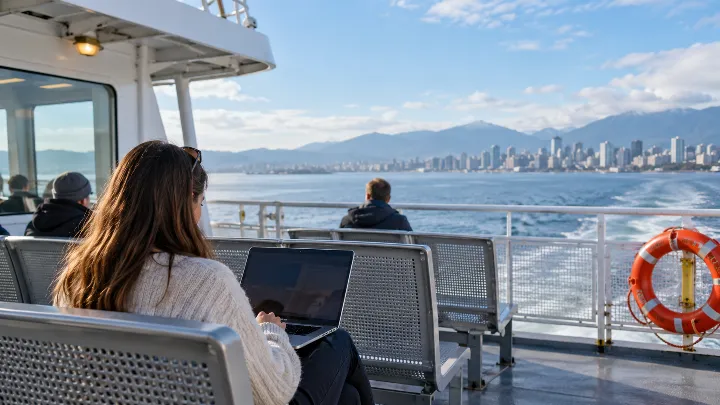
The B.C. Conservatives are promising reliable, high-speed Wi-Fi aboard vessels on major ferry routes and new service standards for BC Ferries. Leader Lorne Doerkson announced the proposals last weekend, about two weeks before the provincial election on Saturday, Oct. 24. Advance voting runs from Friday, Oct. 16, to Wednesday, Oct. 21, overlapping with municipal elections across B.C. on Saturday, Oct. 17.
If elected, the party would introduce a BC Ferries Charter setting expectations for on-time performance and reliability, available space, affordable travel costs and customer service. The party says ferry company leadership would be held responsible for meeting them. It also proposes cutting what it calls duplication at the BC Ferries board level, arguing the change would redirect resources to ferry service and reduce administrative spending. It did not specify board changes, measurable service targets or consequences for missing the proposed standards.
A Conservative government would also negotiate with the federal government for what the party considers a fairer share of federal ferry funding. Calls for greater federal support for BC Ferries have persisted for years. Transport Canada figures show B.C. received about $36.9 million through its annual ferry grant in 2024-25, while operators of three interprovincial routes in Atlantic Canada and eastern Quebec received $65 million. The federal government also funded capital investments for those eastern services and provided separate support to Marine Atlantic. B.C.’s annual grant is governed by a 1977 federal-provincial agreement.
“For families on Vancouver Island, the Sunshine Coast and the Gulf Islands, the ferry is a lifeline, and the NDP has let it fall apart,” said Ryan Windsor, the Conservative candidate in Saanich North and the Islands. “People rely on BC Ferries, and they deserve sailings that leave on time, have room for them and let them stay connected on board.” Doerkson said, “Coastal British Columbians have waited long enough. A Conservative government will deliver the reliable, accountable ferry service they have been promised for years.”
The free Wi-Fi pledge would cover major routes and terminals. Private companies would compete for contracts to provide connections through satellite or cellular networks and would have to meet performance requirements. The Conservatives say restoring fast, reliable onboard Wi-Fi would not add to fares or taxpayers’ costs, but their announcement does not explain how it would be paid for.
BC Ferries discontinued onboard Wi-Fi in 2021 on major routes linking Metro Vancouver with Vancouver Island and the Sunshine Coast. Those routes are served by the fleet’s largest vessels, each with capacity for up to 2,100 passengers and crew. The company cited unreliable connections, rising usage and the cost of upgrading the system. The free service launched in 2010, initially serving about 40 to 50 users per vessel at a time. By 2021, usage had reached about 900 people on the largest vessels. The company said this strained the ship-to-shore wireless system and reduced connection quality and reliability. Free Wi-Fi remained available at terminals and was later expanded to 21 terminals in 2022.
Privately operated Hullo Ferries, a high-speed passenger service launched in 2023 between downtown Vancouver and Nanaimo, has offered free, fast onboard Wi-Fi capable of streaming for years. It uses Viasat’s Ka-band satellite network, designed to provide a high-quality connection in hard-to-reach and remote areas. Viasat technology is also used for in-flight connectivity by several major commercial airlines. Each Hullo Ferries vessel accommodates up to 354 passengers. In 2024, BC Ferries began a very limited test of satellite-based onboard Wi-Fi for crew only, using Starlink.
Without onboard Wi-Fi, passengers lose all internet access during stretches of a sailing when cellular coverage is weak or unavailable, particularly in remote coastal areas and the middle of the Strait of Georgia. The Conservatives’ pledge comes nearly a year after B.C.’s Civil Resolution Tribunal dismissed a claim from a woman who said the lack of internet access prevented her from working during ferry crossings. She alleged $15,840 in lost work time, calculated at $96 an hour for two trips per month over 33 months. Her overall claim also included losses linked to ferry delays and her farm business, and was reduced to $5,000 to fit within the tribunal’s monetary limit. In its November 2025 ruling, the tribunal found she had not established a legal requirement for BC Ferries to provide Wi-Fi and dismissed all her claims.
The proposals follow BC NDP leader David Eby’s platform announcement of a priority-reservation pilot for residents who depend on two selected routes: Horseshoe Bay-Langdale, between Metro Vancouver and the Sunshine Coast, and Westview-Little River, between Powell River and Comox.