 Vancouver
METRO VANCOUVER NEWS
Fact check: Trump falsely says U.S. banks cannot operate in Canada
Fifteen U.S.-based banks operate in Canada as branches or subsidiaries, though Canadian rules can limit how they compete, banking experts say.
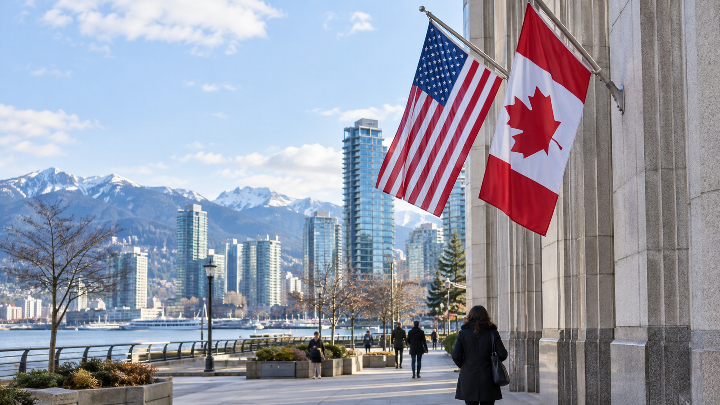
President Donald Trump falsely claimed Wednesday that U.S. banks are not allowed to do business in Canada. He made the assertion during an Oval Office meeting with U.S. travel executives after being asked whether renewed Canada-U.S. trade talks were planned. Experts say U.S. banks may face restrictions in Canada, but are not barred from the market.
A Canadian Bankers Association spokesperson said 15 U.S.-based banks operate in Canada as branches or subsidiaries. Federal Reserve data show eight Canadian banks operate in the United States. The Bank of Canada is not among them: it is Canada's central bank, comparable to the U.S. Federal Reserve, rather than a commercial bank.
Thompson, a finance professor at the University of Waterloo in Ontario, said differences between Canadian and U.S. regulatory systems can create confusion. U.S. banks are permitted to operate in Canada, he said, but their chosen method of entry affects what they can do.
Canada has Schedule I, Schedule II and Schedule III banks. Canadian-owned banks are Schedule I banks; six major Schedule I banks have combined assets exceeding those of the country's 28 smaller banks. Foreign entities can operate as Schedule II banks, which are foreign-owned subsidiaries incorporated in Canada and subject to substantially the same framework as domestic banks, or as Schedule III banks, which are unincorporated foreign-bank branches subject to restrictions including high deposit minimums.
Most U.S.-owned banks in Canada are Schedule III institutions. Canadian Bankers Association spokesperson Nathalie Bergeron said U.S.-based branches and subsidiaries operating in Canada hold about $124 billion in Canadian assets, or US$90.1 billion, representing more than half of the assets held by all foreign-bank branches and subsidiaries. They provide corporate and commercial lending, treasury services, credit-card products, investment banking and mortgage financing to cross-border clients and Canada's domestic retail market. They include J.P. Morgan Chase Bank, Citibank, Bank of America, Capital One and Wells Fargo.
Jeremy Kronick, president and CEO of the Canadian C.D. Howe Institute, said Schedule III banks cannot accept deposits below $150,000, or US$72,529, putting retail banking beyond reach for most customers. Schedule II banks require separate local capital and liquidity structures from their foreign parent companies, which can be inefficient for a bank. Those restrictions may help explain why many U.S.-owned banks do not enter the market.
The Federal Reserve counts more than 3,700 domestically owned commercial banks in the United States, compared with 15 U.S.-based banks with a Canadian presence. Thompson said Canada's smaller market and the established brands, branch networks and customer relationships of incumbent Canadian banks make entry costly while offering only a small initial share of a relatively small market. The White House did not immediately respond to a request for comment. The report, first published Sept. 3, 2026, was updated Sept. 8 to correct the U.S.-dollar asset figure from US$904 million to an estimated US$90.1 billion, depending on the exchange rate.