 Vancouver
METRO VANCOUVER NEWS
David Eby’s NDP pledges a new shipyard to build future BC Ferries vessels in B.C.
David Eby says a re-elected BC NDP government would work with Ottawa on a major new shipyard in B.C. and make the manufacturing jobs fund permanent. His forum commitments also include support for tariff-affected forestry mills and expanded food processing on eligible Agricultural Land Reserve properties.
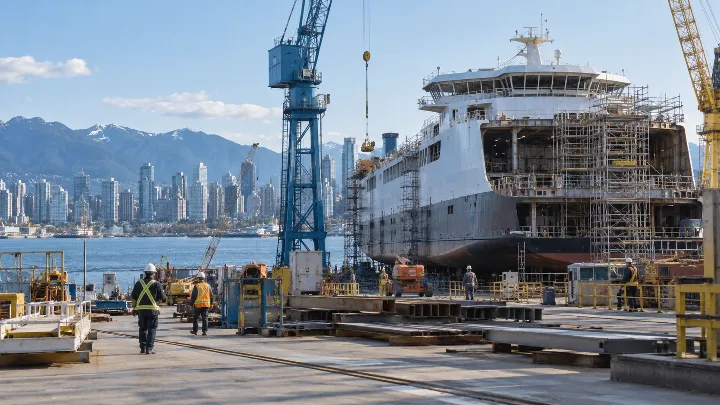
David Eby says a BC NDP government would work with Prime Minister Mark Carney to build an additional major shipyard in British Columbia if re-elected. Speaking at the Greater Vancouver Board of Trade’s forum for the three main provincial party leaders ahead of the Oct. 24, 2026, election, Eby outlined commitments on shipbuilding, manufacturing and food processing as support for businesses facing trade uncertainty.
The shipyard proposal would involve the federal government, shipbuilders and labour organizations. It is intended to support Canada’s defence needs and give the provincial government more capacity to build future BC Ferries vessels. The BC NDP says the project could be Canada’s first new major shipyard in a generation and create thousands of jobs across B.C. The party says up to $250 million is available through the provincial Strategic Investment Fund to attract private investment and federal funding under the Canada-B.C. Shared Prosperity Agreement reached with Carney.
Shipbuilding has featured in the BC NDP’s plans before. During the October 2020 provincial election, then-premier John Horgan promised a long-term B.C. shipbuilding strategy to create jobs and bring more work to local shipyards. In the 1990s, the BC NDP government backed a project to build three fast catamaran ferries for BC Ferries in B.C., aiming to establish the province as a global player in ferry building. The project ultimately became an operational failure and a political disaster for the party.
In September 2026, days before the snap election was called, Eby announced that BC Ferries’ planned additional order of two Summit-class vessels, formerly called New Major Vessels, would be built at B.C. shipyards in the second half of the 2030s. The announcement followed a 2025 controversy over BC Ferries’ selection of a Mainland China shipyard owned by the Government of China to build the first four Summit-class ships. The company selected the yard after an international bidding process that drew no Canadian bids. It cited a highly competitive price and a delivery timeline beginning before the end of this decade that met its vessel-replacement and capacity needs. Canadian yards did not bid partly because they lacked capacity and were occupied with existing federal National Shipbuilding Strategy contracts for combat and non-combat vessels.
BC Ferries has repeatedly warned that even with greater B.C. shipbuilding capacity, local construction of future vessels would require significant capital funding from senior governments to cover costs far higher than those at shipyards in China and Europe. The company faces a fiscal cliff later this decade as operating and capital costs rise, and has warned fares could come under major upward pressure starting in 2028. The Summit-class vessels will be BC Ferries’ largest, exceeding the size and capacity of the existing Spirit-class ships. They are intended for major routes connecting Metro Vancouver with Vancouver Island and the Sunshine Coast. Eby’s announcement did not name a shipyard location or completion timeline.
Eby also pledged to make the B.C. Manufacturing Jobs Fund permanent, with an annual budget of $60 million. Some of the funding would go to forestry mills affected by tariffs so they can upgrade facilities, maintain employment and find additional markets. A third commitment would permit more food processing on eligible Agricultural Land Reserve (ALR) properties poorly suited to primary food production. The BC NDP says it would maintain protections for prime farmland while creating room to process more B.C. food in the province and support local jobs.
Eby argued that continued investment in infrastructure and public services is needed for economic growth. He said deep cuts would undermine the ability to grow, halt critical infrastructure and weaken services that businesses rely on to attract talent. He called for building on progress and continuing to work with the prime minister, rather than putting that at risk with cuts and chaos.
The announcement cited economic figures as evidence of progress while acknowledging continued pressure on businesses from the trade war. The party says B.C. exports to destinations outside the United States rose 16 per cent over the past year.
In the provincial election on Oct. 24, voters will choose the MLA for their riding, helping determine which party forms government. Advance voting will run for six days, from Friday, Oct. 16, to Wednesday, Oct. 21. A week before the provincial vote, on Saturday, Oct. 17, voters across B.C. will also elect mayors, city councillors and other local representatives in municipal elections.