 Vancouver
METRO VANCOUVER NEWS
Humpback whale Notcho dies after being struck by a BC Ferries vessel
A dead humpback found near the site of a reported ferry strike is likely the same whale seen bleeding after the collision 10 days earlier, the Marine Education and Research Society says. Photos and flipper markings helped identify it as Notcho.
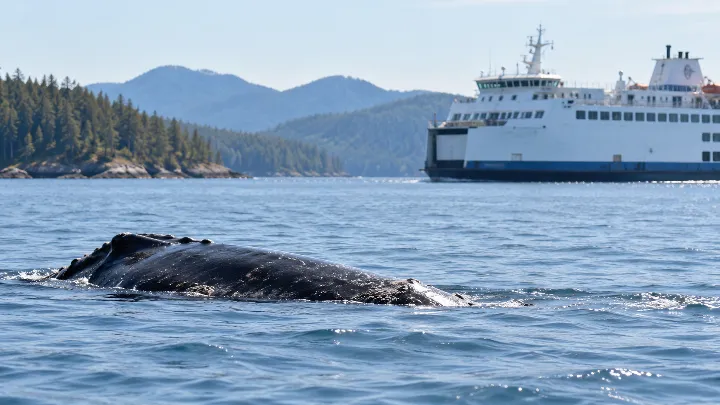
A humpback whale reported struck by a B.C. ferry 10 days earlier appears to have died. The Marine Education and Research Society (MERS) says the dead whale was seen on the evening of Oct. 26 near the Grace Islands, the same location where a ferry reported hitting a whale.
MERS executive director Caitlin Birdsall said the animal was seen surfacing after the strike, with significant blood in the water. Poor-quality photos meant the society could not identify which whale was involved at the time. Birdsall said BC Ferries staff did see a dead whale in the water on Monday, and the Department of Fisheries and Oceans Canada recovered it. The society cannot say for certain that it was the same whale involved in the strike, but the location and timing make that likely.
They believed the whale was “Notcho,” Birdsall said, but the connection was made only after they received photos from a member of the public who lives on Gambier Island. Under the Canadian Pacific Humpback Collaboration, a group of agencies and organizations that catalogue and monitor humpback whales along the B.C. coast, Tasli Shaw, a member of the Humpbacks of the Salish Sea project, matched markings on the whale’s pectoral flipper with a long-term data set to identify it as Notcho.
Birdsall said the society has recorded Notcho sightings in the area since about 2016. The whale travels to Hawaii to breed, then returns to local waters to feed in the summer, she said. They do not know Notcho’s age.
Fisheries and Oceans Canada is leading the investigation and assessment. In a statement, BC Ferries said it shares these waters with whales and other marine wildlife and takes that responsibility seriously. It said it has measures to reduce the risk of vessel strikes, including crew training, marine mammal reporting procedures and operational practices intended to reduce interactions with whales. The company said it continues to review its practices and work with federal agencies and marine conservation partners to find further ways to reduce the risks.
Birdsall said people can still do a lot to prevent whale strikes in B.C., including through slow-down zones, the whale report alert system, and acoustic and infrared detection.