 Vancouver
METRO VANCOUVER NEWS
100-foot Canadian Coast Guard hovercraft deployed in mock YVR emergency drill
More than 400 people from 25 agencies and over 175 volunteers took part in YVR’s annual full-scale emergency exercise, simulating an international flight landing short of the north runway.
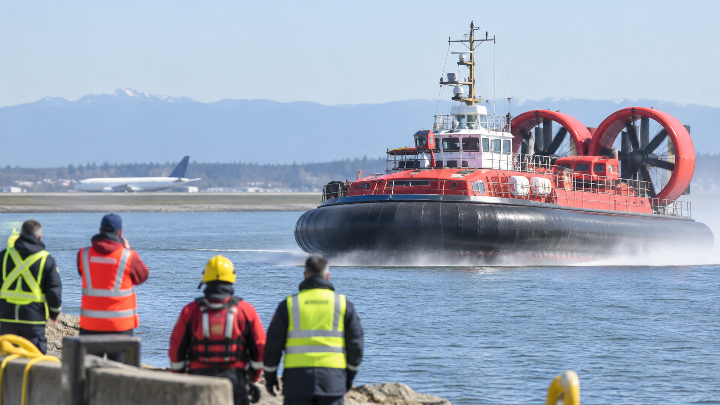
Vancouver International Airport held its annual full-scale emergency exercise Sept. 15, simulating an arriving international flight landing short of YVR’s north runway. More than 400 people from 25 agencies and over 175 volunteers participated in the drill, which is intended to test and improve emergency-response capabilities.
Volunteer “travellers” were taken from the mock crash site on West Dyke Road by a 100-foot Canadian Coast Guard hovercraft and brought to the Coast Guard’s Sea Island Station for triage and care. Those not requiring medical attention were taken to the Canada Border Services Agency’s arrival transfer facility for immigration processing and family reunification.
YVR chief operations officer Andy Margolis said the airport’s Integrated Operations Centre handles day-to-day decision-making, while an Emergency Operations Centre is staffed separately during an incident. YVR also runs smaller weekly exercises and has emergency teams on call 365 days a year. Most on-call teams must reach the airport within 30 minutes, though the response depends on the incident.
Bruce Briggs, acting senior director of fleet muster at Canadian Coast Guard Station Sea Island, said the hovercraft was suited to the mock-crash location because it could not be reached by road vehicles or watercraft. Its amphibious capability allows it to operate in mudflats and shallow water. The Coast Guard also handles casualty tracking, transport and communications with other agencies during rescues.
CBSA Vancouver International Airport chief of operations Jackie Tse said passengers arriving on an international flight must still speak with CBSA officers after an aircraft emergency, although injured passengers receive medical care first. Supt. Diana Gunadi said the exercise helps officers identify what works, what does not and any resource gaps so they can be better prepared for a real emergency.
Richmond RCMP media spokesperson Cpl. Frank Bryson said police would issue and update a warning statement during an actual emergency as information arrives from other responders, but would not release information that could compromise an investigation.