 Vancouver
METRO VANCOUVER NEWS
Rising costs are squeezing two Indigenous-owned airlines operating near Vancouver
Gulf Island Seaplanes and Iskwew Air report higher fuel, maintenance, insurance and labour costs. One has raised fares and added a fuel surcharge; the other plans a fare increase.
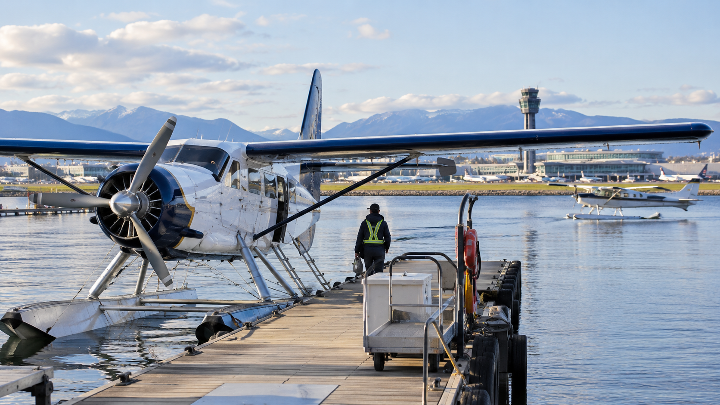
Soaring fuel prices, broad inflation and consumers cutting spending have made airline operations more challenging in recent months, the principals of two Indigenous-owned airlines say. They said identifying their businesses as Indigenous-owned on their websites has not significantly boosted revenue or their bottom lines; they face the same business realities as competitors. Alison Evans, a member of Hagwilget Village First Nation and co-owner of Gulf Island Seaplanes with her husband, Sean Evans, said fuel and maintenance costs have risen significantly and the company has to pay everyone more. “It just never ends,” she said. Teara Fraser, a Métis woman who owns a majority stake in Iskwew Air, said the cost of parts, fuel, insurance and everything else has increased. The airline also faces labour shortages among aircraft maintenance engineers and pilots. Raven Indigenous Capital Partners joined as a minority partner in 2024. Fraser said Iskwew is a Cree word for “woman,” chosen to honour ancestral matriarchs.
The cost increases mean fare changes are necessary. Evans said she has raised prices and added a fuel surcharge to keep the business viable. Fraser has kept fares stable without a fuel surcharge, but intends to raise them soon. Other signs of strain include airlines receiving government bailouts in the form of low-interest loans. In mid-September, the federal government’s Liquidity for Airline Sector Resilience (LASR) fund announced approvals of $76 million for Flair Airlines, $150 million for Transat A.T. Inc., which operates Air Transat, and $150 million for Porter Airlines. The government created the fund in June to provide temporary financial support to airlines facing pressure from rising aviation fuel costs.
High fuel costs are also prompting route cancellations. Air Canada spokesperson Angela Mah said the airline plans to end service between Vancouver International Airport (YVR) and Singapore in late January because high aviation fuel prices make ultra-long-haul flights inefficient. Consolidation may be another sign of stress. In mid-September, two Richmond-based airlines announced a corporate integration: Harbour Air said it planned to buy Pacific Coastal Airlines for an undisclosed amount, subject to regulatory approval.
John Korenic, an adjunct professor of aviation at the University of British Columbia’s Sauder School of Business, said consolidations often happen when operating conditions are difficult and executives seek to make their businesses more efficient. He said he was “a little surprised” by the federal government’s low-interest loans, as he believes airlines should set money aside for a rainy day. Evans and Fraser each told BIV they are not looking to be acquired because their businesses are doing well enough on their own.
Fraser incorporated Iskwew Air in 2016, received its operating certificate in October 2019 and launched cargo flights in November 2019. The COVID-19 pandemic then challenged operations and delayed the planned scheduled passenger service between Qualicum Beach Airport and YVR’s south terminal until 2021. That year, Fraser also launched the company’s aircraft maintenance division. Most of its work is for Iskwew’s fleet of three Piper Navajo Chieftain aircraft, each seating eight people. Fraser said the airline flies them year-round at the same frequency: three round trips per weekday and two per day on weekends between Qualicum Beach and YVR’s south terminal. She said demand is steady year-round. Korenic said most airlines tend to see lower air-travel demand in winter, particularly for travel within B.C. compared with flights to sunny destinations.
Fraser said the 14-employee airline could expand with one new route, but she would not yet identify the airport. “We’re continuing to assess the market and we certainly do hope to expand, but we don’t have definitive plans for that at the moment,” she said. Fraser supports government efforts to make travel more affordable in Canada. On Sept. 15, Prime Minister Mark Carney announced a plan to let private investors buy concession agreements from the government to operate major airports in Vancouver, Calgary, Toronto and Montreal. Carney said the government would direct the resulting capital to smaller airports across the country. Fraser said she did not know enough about the details to say whether she supports the plan, but likes its broader goal of investing in smaller airports. She said Canada needs a robust, reliable and resilient air transportation system to be connected and thriving. She called on the federal government to treat air transportation as essential infrastructure and invest accordingly, and to take an active role in finding ways to lower costs for Canadian travellers and consumers.
Evans launched Gulf Island Seaplanes in 2014. It has become B.C.’s longest-running Indigenous-owned airline. For years, it operated flights between Gabriola Island and a seaplane facility on the Fraser River beside YVR’s south terminal. Evans said most passengers were commuters who lived on Gabriola Island.