 Vancouver
METRO VANCOUVER NEWS
Confidential documents outline B.C. NDP plan to change forestry compensation rules for 400 land transfers
Documents prepared before Premier David Eby called a snap election outline four proposed Forest Act changes that could reduce compensation for logging rights on about 400 Crown land parcels already committed for transfer to First Nations. The documents do not identify the parcels, their combined area or projected Crown
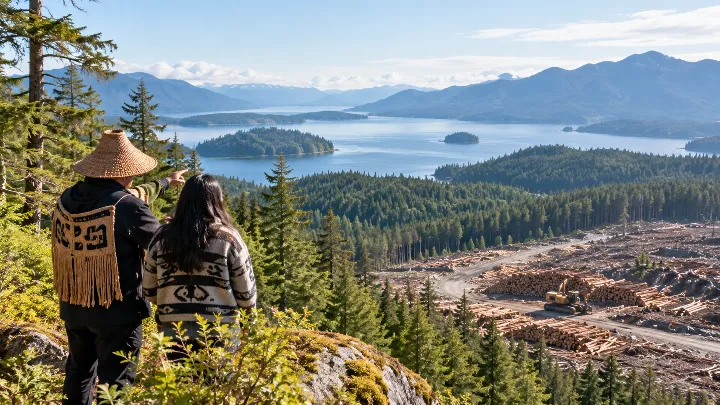
B.C. legislative reporter Rob Shaw reported the confidential Ministry of Forests documents for The Northern Beat. A ministry presentation dated Sept. 10, 2026, less than two weeks before Premier David Eby called a snap provincial election on Sept. 22, set out a schedule for developing legislation with First Nations, with a bill targeted for spring 2027. An accompanying backgrounder described compensation for lost harvesting rights as a financial barrier to completing the transfers, saying fiscal constraints made the provisions a substantial obstacle to land returns.
The B.C. NDP-led government has committed about 400 Crown land parcels for transfer to First Nations through treaty and reconciliation agreements. Neither document names the parcels, states their combined area or estimates savings from changing compensation rules. The proposals would change how compensation is handled when existing logging rights are removed as the already-agreed transfers proceed. Logging rights affect a forestry business’s timber supply, future earnings and ability to invest. Removing rights without compensation would shift more of the transfer cost from government to affected businesses, potentially limiting their ability to adjust operations and sustain jobs. Contractors and small forestry-dependent communities could also be affected. The province could face lower compensation costs, while transferred land could support new economic opportunities for First Nations.
The government projects deficits of $13.8 billion in fiscal 2026/27, $12.7 billion in 2027/28 and $12 billion in 2028/29. The documents’ reference to fiscal constraints comes amid historically large deficits, which the article attributes to elevated provincial spending, stagnant and declining revenues, and rising interest costs on growing debt. Annual interest costs would rank third behind health care and education if treated as a ministry budget. Provincial debt is expected to reach $181 billion by the end of the current fiscal year and nearly $236 billion before the decade ends.
The main proposal would let the province reduce a licence holder’s annual timber allowance by up to five per cent without compensation, using the same allowance that applies to parks and conservation areas. Reductions would accumulate over a set period, including earlier cuts in that category, rather than reset each year. Compensation could be payable for losses above the five-per-cent limit. Sharing the allowance could also affect future parks and conservation projects. A separate five-per-cent allowance applies to access purposes such as highways, pipelines and power lines; the combined maximum would remain 10 per cent. Compensation would still apply to harvesting reductions caused by directly granting or expanding First Nations forestry licences.
The ministry says the changes would make transfers more predictable, align compensation with other public uses and support the cultural, social, environmental and economic benefits of reconciliation. Two further proposals address situations where a First Nation or company loses logging rights but also benefits from the same provincial decision. Currently, a First Nation that directly holds the rights may have its compensation reduced when it receives the land, while a separate company it controls may still qualify for payment. The changes would count benefits to related businesses, including joint-venture partners. In one example, a First Nation’s company would receive no compensation for logging rights removed from land transferred to that First Nation, while unrelated business partners would still be compensated. The backgrounder says affiliated businesses hold 80 per cent of First Nations’ total annual harvesting allowance; First Nations hold 20 per cent directly.
Some First Nations and their affiliated businesses would retain compensation for all affected harvesting rights when land is transferred to another First Nation. That could include rights originally granted to address impacts on Indigenous rights, even when losses are below five per cent. Exceptions would also preserve compensation needed to honour existing agreements or negotiated commitments. The fourth proposal would remove expiry dates for special purpose areas, designations used to prepare Crown land for transfers and other uses. They currently last up to three years, with one extension permitting a total of up to six years. The change would apply to every purpose covered by a designation. The ministry says some agreements take longer than six years; removing expiry dates could reduce repeat approvals, protect land while agreements are finalized and avoid potential additional compensation costs when designations expire.
A timeline in the September 2026 presentation identifies July 2026 as the cabinet decision stage, followed by consultation and co-operation with First Nations in fall 2026. This indicates the process had advanced beyond initial policy exploration and reached the scheduled cabinet decision stage. However, the documents do not include a cabinet decision or a completed bill. The schedule anticipates drafting legislation that winter, sharing the draft with First Nations where confidentiality permits, revising it in light of feedback and introducing it during the spring 2027 legislative session.
Eby, responding to Shaw’s disclosure at an unrelated press conference later on Oct. 15, rejected suggestions that his government had concealed the land commitments and confirmed the figure of about 400 parcels. He said some commitments were more than a decade old and arose from publicly discussed treaties and agreements, including agreements reached by the previous provincial government. Eby said the proposed changes were intended to reduce the public cost of fulfilling those commitments while supporting agreements that allow forestry to proceed. He said the changes would ease pressure on the provincial budget and enable forestry in several parts of the province.
Eby defended requiring participants to sign non-disclosure agreements, describing it as routine during consultations on proposed legislation. He said he had signed such agreements while working in the non-profit sector and discussing legislative proposals with the former B.C. Liberal government led by Christy Clark. Asked whether reduced compensation could worsen forestry job losses and mill closures, Eby argued that agreements with First Nations help prevent legal disputes from blocking logging. He also said First Nations and community-held forestry rights can support local economic activity, jobs and municipal revenues. Eby did not estimate the expected compensation savings or provide the parcels’ combined area.
About 12 hours before Shaw’s report on the morning of Thursday, Oct. 15, Eby and the B.C. Conservative and Green Party leaders took part in a televised election debate on Wednesday evening, Oct. 14. At the press conference, Eby was asked why he had not directly answered a debate question about undisclosed land transfer agreements with First Nations. He replied that some commitments dated back more than a decade and were part of signed, publicly known treaties, suggesting the plan’s general intent was already technically public.
The B.C. Conservative Party accused Eby of keeping voters in the dark before the election. Candidate Scott McInnis said in a statement that Eby and the NDP appeared to be telling British Columbians one thing while making secret deals that said another. He said a re-elected Eby NDP government would mean more broken promises and revelations after election day, adding that voters had seen the pattern before.
The Homes Not Bank Machines Coalition also called on the B.C. NDP to identify the parcels, disclose their locations and sizes, and explain the financial and employment implications before voters cast ballots. Lawyer and retired registered professional forester Wes Mussio said voters are entitled to know a government’s intentions before giving it a mandate. He urged Eby to release details of potential job and revenue impacts. Mussio argued that reducing compensation for existing logging rights could erode business confidence in provincial agreements, with concerns extending to mining and other resource industries. He said the changes sent a chilling message about whether Crown land agreements could be trusted.
The coalition wants the province to assess potential losses in resource revenue, employment effects, and compensation or legal costs arising from the transfers. Mussio questioned how lost revenue would be replaced to maintain public services. The group is also demanding that confidentiality restrictions be lifted so affected companies and workers can discuss the proposals publicly, and that the agreements and proposed forestry law changes be disclosed and debated in the legislature before further deals are signed.
The documents suggest the B.C. NDP-led government remained set on advancing its land transfer agenda amid public unease and criticism of its reconciliation approach. Although the proposals concern Crown land, they arise amid wider debate about private property protections, investment certainty and provincial authority under B.C.’s Declaration on the Rights of Indigenous Peoples Act (DRIPA), the legislation implementing the United Nations Declaration on the Rights of Indigenous Peoples in the province. An Angus Reid Institute poll in May 2026 found 55 per cent of British Columbians thought Eby had handled the balance between Indigenous land rights and private property rights poorly. A Research Co. poll in August 2026 found 61 per cent supported pausing Aboriginal title negotiations until the Cowichan Tribes case is settled, up nine percentage points from November 2025. Meanwhile, 69 per cent believed property owners should be concerned about the ruling, and 53 per cent said fee-simple private ownership should always take precedence over Aboriginal title.
Vancouver Sun columnist Vaughn Palmer has repeatedly criticized the Eby government’s secrecy around consequential, long-term First Nations agreements and policy changes. Further changes through confidential briefings could deepen concerns about democratic accountability, especially where decisions about public land could bind future governments and carry lasting economic consequences. The risks include investment, employment, control over resource development and provincial revenue available for hospitals, schools, public transit and other infrastructure. The Business Council of British Columbia has reported that respondents to its member survey were reducing investment and hiring plans amid concerns about DRIPA’s implementation.
The provincial election’s general voting day is Saturday, Oct. 24, 2026, to elect MLAs and help determine which party forms the next provincial government. Advance voting runs for six days, from Friday, Oct. 16, to Wednesday, Oct. 21. The separate municipal election’s general voting day is Saturday, Oct. 17, a week earlier, to elect mayors, city councillors and other local representatives.