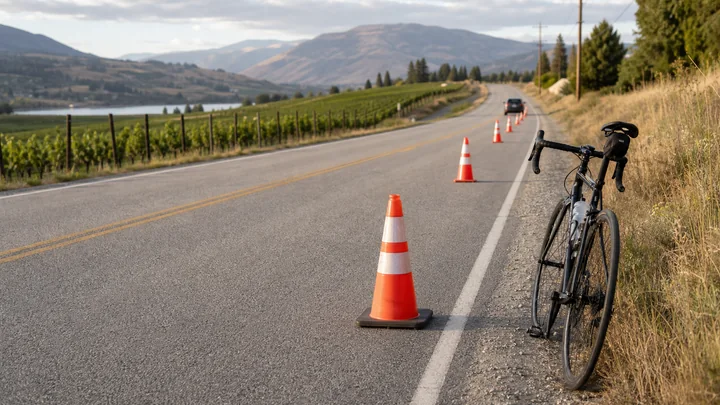
Driver charged in Okanagan Granfondo crash that killed cyclist
One year after a crash at the Okanagan Granfondo that left one cyclist dead and two others injured, authorities have announced criminal charges against a driver.
CTV News Vancouver
 Vancouver
LOCAL STORIES · COMMUNITY UPDATES
Keep up with local stories, community updates and public services across Vancouver.
BROWSE BY AREA
GET TO KNOW YOUR CITY
One year after a crash at the Okanagan Granfondo that left one cyclist dead and two others injured, authorities have announced criminal charges against a driver.
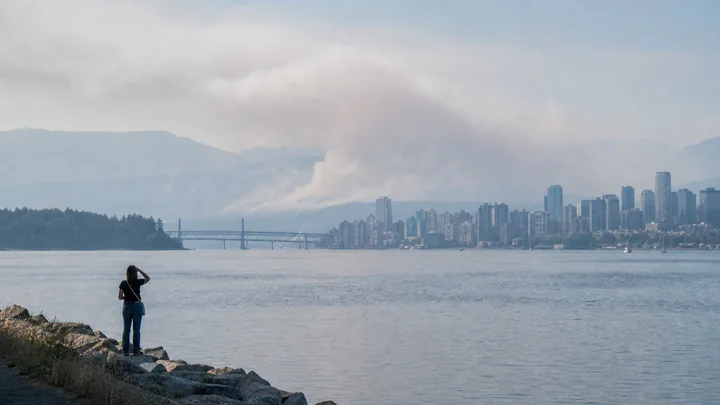
As wildfire season ramps up and tensions over smoke rise Canada-wide, B.C.’s minister of forests is sounding off on tariff threats imposed by U.S. President Donald Trump.

If you’re planning a getaway around B.C. this week, be aware that heat warnings are up in many regions, with a “period of elevated temperatures” expected to last for several days. While wildfire smoke is impacting Metro Vancouver and several parts of the province, other areas are being warned of high temperatures that are a “risk to public health.” According to Environment and Climate Change Canada (ECCC), over a dozen yellow heat warnings are in place throughout B.C., and the public is urged to use caution. Temperatures are expected to reach mid-to-high 30s in several parts of the province, combined with overnight lows in the mid-to-high teens. You might also like: - B.C. hotel snags prestigious crown of Canada's top resort in global awards - Vancouver is Canada's most expensive city to rent in and afford a vacation - Popular B.C. wilderness escape crowned best island in Canada “A ridge of high pressure will bring elevated temperatures to the region,” said ECCC in its warning posted online. “High temperatures may persist until Thursday, followed by a cooling trend.” EmergencyInfoBC, operated by the Government of B.C.’s Ministry of Emergency Management and Climate Readiness, listed the 18 regions currently under active heat warnings: - Central Okanagan – including Kelowna - North Okanagan – including Vernon - South Okanagan – including Penticton - South Thompson - Boundary - Central Coast – inland sections - North Coast – inland including Terrace - North Coast – inland including Kitimat - Shuswap - West Kootenay - Howe Sound - Whistler - Sunshine Coast - Fraser Valley – central including Chilliwack - Fraser Valley – east including Hope - Fraser Valley – west including Abbotsford - Fraser Canyon – north including Lillooet - Fraser Canyon – south including Lytton During heat warnings, ECCC reminds people to check on their vulnerable friends, family, and neighbours who are at higher risk during hot weather. There are some early signs of heat illness to look out for: - Feeling unwell - Fatigue - Thirst - Headache - Unusually dark urine If you are experiencing any of these issues, you’re encouraged to move to a cooler environment, such as a shaded or air-conditioned space. EmergencyInfoBC also urged British Columbians to drink plenty of water, take precautions to stay cool, and call 911 or their local emergency number in case of a medical emergency. Closer to home, temperatures in Metro Vancouver could feel up to 35°C inland on Tuesday, with a UV index of 8, or very high. Midweek temperatures could reach up to 31°C inland on Wednesday and 28°C on Thursday before cooler temperatures return right before the weekend.

President Donald Trump signed orders Monday to hammer certain Canadian products with 50 per cent tariffs, escalating trade tensions with the United States’ northern neighbour. “President Trump is taking action to hold Canada accountable for its continued discrimination against and unreasonable and unequal treatment of U.S. commerce that has burdened and disadvantaged hardworking Americans,” a […]
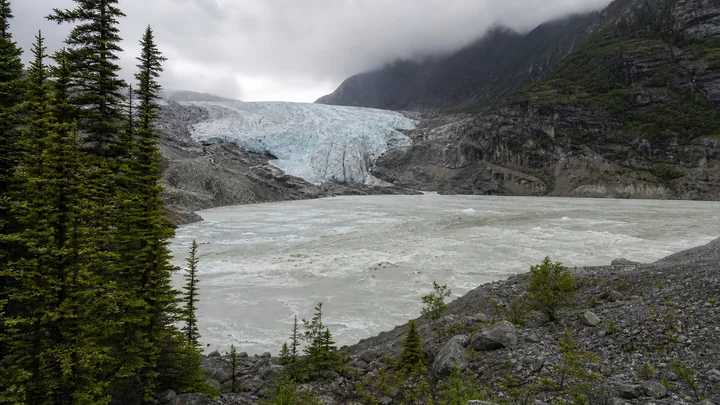
A glacial outburst near Pemberton, B.C., is “well into the rapid drawdown phase,” gushing water and debris downstream with flows expected to reach a peak on Monday.
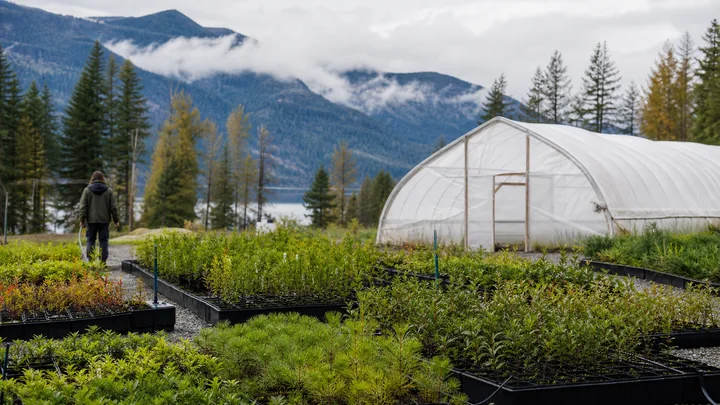
A group of B.C. First Nations says a new native plant orchard could help reclaim and restore thousands of industrial sites around the northeast region of the province.
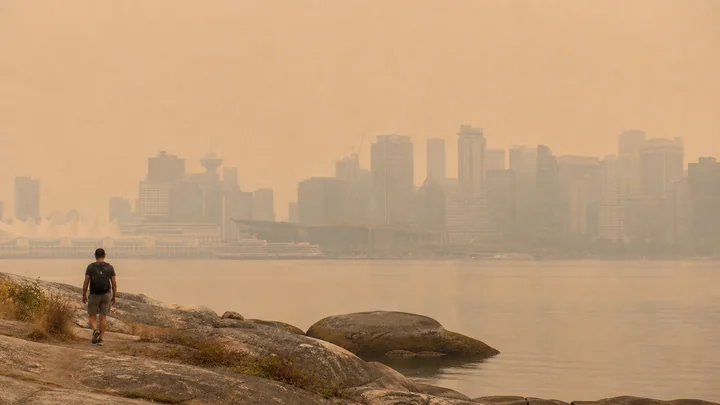
Temperatures are going to soar into the 30s over the next few days in several parts of B.C., prompting a series of heat warnings from Environment and Climate Change Canada.

The energy at FIFA Fan Festival in Vancouver was unmatched as Spain defeated Argentina to take home the World Cup.

Canadians affected by a Capital One data breach could soon be eligible to claim compensation after a proposed class-action settlement was reached. On July 16, Charney Lawyers announced that Capital One Financial Corporation, Capital One Bank (USA), National Association, and Capital One Bank (Canada Branch) have agreed to a $35-million settlement to resolve the class-action lawsuit related to a 2019 data breach that affected customers in Canada. The company issues credit cards for its banking business as well as for Costco and Hudson’s Bay Company. The settlement still has to be approved by the court. THE ALLEGATIONS The lawsuit against Capital One was launched following a data breach in 2019, in which a hacker gained unauthorized access to applicants’ and cardholders’ personal information. According to a court document, the company stores information in a database on Amazon Web Services, a third-party cloud-based server in the United States. In the spring of 2019, American software engineer Paige Thompson hacked Capital One’s database, downloading personal and financial information belonging to millions of U.S. and Canadian residents who had applied for Capital One credit cards. The breach, which impacted six million Canadians, was discovered by an independent security researcher in July 2019, who contacted law enforcement, resulting in Thompson’s arrest by the FBI on July 29, 2019. Capital One published a notice about the data breach the same day. Data stolen from Canadians included personal details submitted on credit card applications between 2005 and 2019. Stolen data included names, addresses, and contact information, as well as financial information such as annual income, status of mortgage, banking information, credit scores, credit limits, balances, payment history, and some transaction histories. Around one million Social Insurance Numbers (SIN) were compromised. The class action alleges that Capital One failed to protect customers’ personal information adequately, resulting in breaches of privacy, contract obligations, and consumer protection laws. The class action’s website states, “Capital One does not admit and denies any wrongdoing or liability.” ARE YOU ELIGIBLE? You could be eligible to file a claim if you are a Canadian resident outside Quebec who applied for or held a Capital One credit card and received a letter stating that your personal information may have been affected by the data breach. HOW MUCH COULD YOU RECEIVE? If you’re eligible, the amount you receive depends on your type of claim. You could receive compensation if you fit into the following categories: - Category A claims for out-of-pocket costs: You could be reimbursed for out-of-pocket costs as a result of the data breach if you spent money on preventative measures such as credit monitoring services, insurance, or credit freezes. You may also be reimbursed for losses related to identity theft, falsified tax returns, or other alleged wrongdoing. Each member in this category can claim up to a maximum of $25,000. - Category B claims for wasted time and inconvenience: For affected class members whose SIN was not compromised but who spent time responding to the data breach, they can claim $25 per hour for up to five hours, to a maximum of $125. Canadians whose SIN was compromised can claim up to eight hours to a maximum of $200. Those who submit valid claims in this category will receive an additional $75 “top-up” payment, bringing the maximum payment under both sections to $200 for those whose SIN was not compromised, and $275 for those whose SIN was compromised. - Category C claims for annual credit card fees: All annual fee class members will receive up to $50 when they submit a valid claim. WHAT SHOULD YOU DO NEXT? For now, you don’t need to do anything. If the court approves the settlement, eligible class members will be able to submit a claim once the claims process opens. The approval hearing is scheduled for Sept. 22, 2026. Visit the class action’s website for details. Canadians could also be eligible for other class-action lawsuits, including those involving StubHub and Uber. You might also like: - Canadian airline cuts fuel surcharge, brings it back weeks later - Class-action lawsuit filed against StubHub in Canada - Canadians could be part of a class-action lawsuit against Uber

Metro Vancouver may be in for some sweltering temperatures this week, but a recent emergency readiness poll shows that many people in British Columbia are worried about a surprise expense taking out their rainy day fund. According to a recent report by RBC, 42 per cent of B.C. residents reported that they feel they’re just one major unexpected expense away from being financially “over the edge.” Even a smaller unexpected financial hit could have severe consequences for over a third of B.C. respondents to the national poll. You might also like: - 'Morale is low': Layoffs hit London Drugs as B.C. employees are impacted - Wildfire smoke impacts Vancouver as temperatures will feel like 35°C - Glass-smashing spree causes major damage to Metro Vancouver vehicles “Financial stress in any form can affect how secure and in control people feel,” said Erica Nielsen, Group Head, RBC Personal Banking, in a release. Over 75 per cent of the respondents to the RBC Emergency Readiness Poll of Canadians aged 18+ named high cost of living as the number one reason why they are finding it harder to build or maintain emergency savings. And 45 per cent of British Columbians reported that their finances are stretched too thin for them to make any progress towards their emergency savings in case of a surprise expense. Just over 40 per cent of all respondents to the RBC poll shared that they underestimated how much they should save for unexpected costs, and 25 per cent had recently dipped into their emergency fund but had not yet rebuilt it. These figures correspond with similar findings in the latest MNP Consumer Debt Index, which reveals that for around 58 per cent of B.C. residents, at least half of their income has already been committed before they get their paycheque. MNP pointed to the fact that many B.C. residents are caught in what it coined a “pre-spent paycheque cycle.” Upon entering each pay period, for these folks, most of their income has already been dedicated to certain expenses. According to the Government of Canada, ideal emergency savings are the equivalent of three to six months of regular expenses, or saving three to six months of income. B.C.’s lowest-paid workers received a boost to the minimum wage starting on June 1, but another recent report revealed an increasing gap between pay and the cost of living in the province. BC Policy Solutions and Living Wage BC highlighted Statistics Canada data showing that a third of B.C. workers earn less than the living wage in their communities. How hopeless or hopeful do you feel about your financial situation in 2026? Share your experience with us at vancouver@dailyhive.com. With files from Daily Hive staff

Staff at BC Ferries are hoping a stuffed pink donkey that was left behind on a sailing will eventually be reunited with its owner.
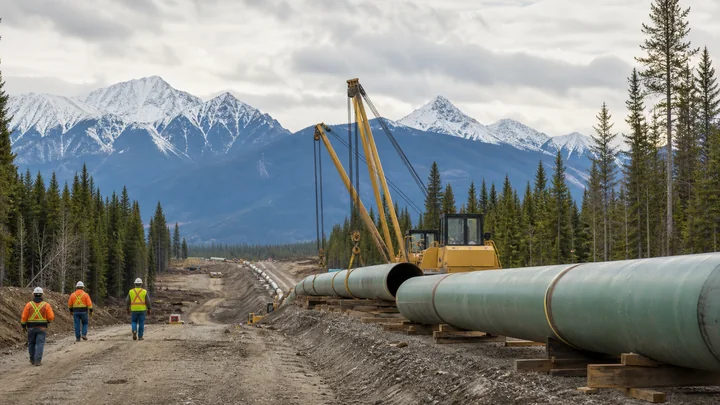
Enbridge Inc. has broken ground on a $4-billion natural gas pipeline expansion in British Columbia.
More to discover in Yo! Vancouver