 Vancouver
METRO VANCOUVER NEWS
Local governments must take bold action to support growth, Maple Ridge official says
Maple Ridge planning director James Stiver outlines the city’s housing, renter-protection and infrastructure work as population growth continues. He says provincial and federal investment will also be needed to support essential services.
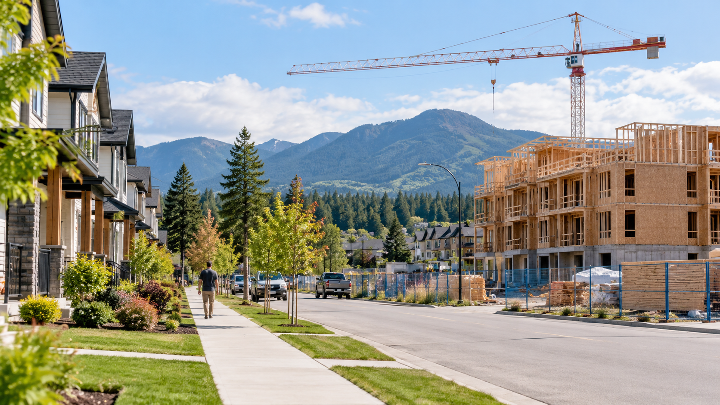
In an Oct. 1, 2026, commentary, Maple Ridge Director of Planning and Building James Stiver said local governments across British Columbia face a shared challenge: encouraging more affordable housing as a soft market prompts the development industry to pull back from building. At the same time, communities such as Maple Ridge continue to grow, putting pressure on municipalities to invest in infrastructure, services and amenities that can support that growth over the long term.
Stiver said Maple Ridge is responding through land-use planning, long-term capital investment and changes to how it delivers services. He said local governments need to use the tools available to guide growth to suitable areas, improve development processes and support complete, liveable neighbourhoods. A housing-market downturn should not put that work on hold, he wrote, and municipalities need to innovate and collaborate with the development industry.
The city has introduced Velocity, a development-approval program intended to advance projects that support strategic community priorities, including affordable housing, transit-oriented development, and commercial and industrial projects that create jobs. Eligible applicants receive a dedicated senior city contact who leads an integrated approvals team and helps them navigate complex planning approvals, including rezoning, development permits, subdivisions and variances. The program adds support but does not replace required project reviews or remove City Council oversight. Participation does not guarantee approval.
Velocity is part of the city’s wider effort to streamline and modernize planning and permitting. Other measures include the Certified Professional Program and an online permit application portal. The city says online applications have cut review times for new-home permits by about 75 per cent, with new-home construction permits now processed in 10 weeks or less.
Maple Ridge is one of the Lower Mainland’s fastest-growing communities. The city estimates its population grew 11 per cent from 2021 to 2025 and could grow by as much as 40 per cent over the next 25 years. Stiver said that growth brings opportunities but also requires careful decisions about where housing goes, what development needs, which infrastructure is required and how project timelines can align with municipal planning and capital investment.
The city says Maple Ridge has reached just over 99 per cent of its cumulative two-year provincial housing target. That work is part of its Housing Action Plan: Building Our Community for All, which focuses on areas local government can directly influence. Recent housing actions also include four proposed new medium- and high-density zones in key growth areas, including Transit-Oriented Areas, the Town Centre and the Lougheed Transit Corridor. The zones are intended to support apartments and mixed-use buildings near transit, shops, services and employment areas, while updated standards would address building design, indoor and outdoor amenities, commercial space, child care and local services.
The city has also advanced updates to its tenant-protection framework, including a new Tenant Protection Bylaw, changes to tenant relocation-assistance policies and a new Rental Protection Policy. The measures are intended to provide clearer information, stronger protections and a fairer process when redevelopment could affect existing renters.
Maple Ridge is planning for housing alongside employment growth, transportation and infrastructure. The North 256 Street Industrial Area Plan is one example. The city says supporting new and expanded employment lands can attract business investment, strengthen the local tax base and support local jobs.
The city’s 2026–2030 Capital Plan includes nearly $432 million in planned investments for transportation, utilities, public safety and community facilities. Major projects prioritized for the community’s long-term liveability include extending Abernethy Way to connect with 500 acres of new industrial lands at North 256 Street; planning a 240 Street bridge to provide an essential connection to Silver Valley; and supporting TransLink’s expansion of Golden Ears Way and a Bus Rapid Transit line linking the town centre to Langley.
Stiver said growing housing demand also means communities need the amenities, infrastructure and services that support everyday quality of life, so managing growth cannot rest with municipalities alone. Maple Ridge is updating zoning, improving processes, planning around transit and infrastructure, protecting renters and preparing for long-term growth. Continued provincial and federal investment will also be needed for schools, infrastructure, health care, child care and other essential services outside the city’s direct mandate.
Stiver said cities need to keep pursuing measurable housing progress and take practical steps to support community growth. Maple Ridge’s challenge, he wrote, is to keep aligning housing, infrastructure, amenities and employment growth so the city remains complete, liveable and connected for current and future residents. He said he is proud of his team for taking on that challenge.