Montrose appeals refusal to reopen Cowichan Aboriginal title case
Richmond developer Montrose Properties is appealing a ruling that denied its bid to join and partly reopen the Cowichan Tribes Aboriginal title case after the trial had concluded.
LOCAL STORIES · COMMUNITY UPDATES
Keep up with local stories, community updates and public services across Delta, Tsawwassen, Ladner.
BROWSE BY AREA
GET TO KNOW YOUR CITY

Richmond developer Montrose Properties is appealing a ruling that denied its bid to join and partly reopen the Cowichan Tribes Aboriginal title case after the trial had concluded.

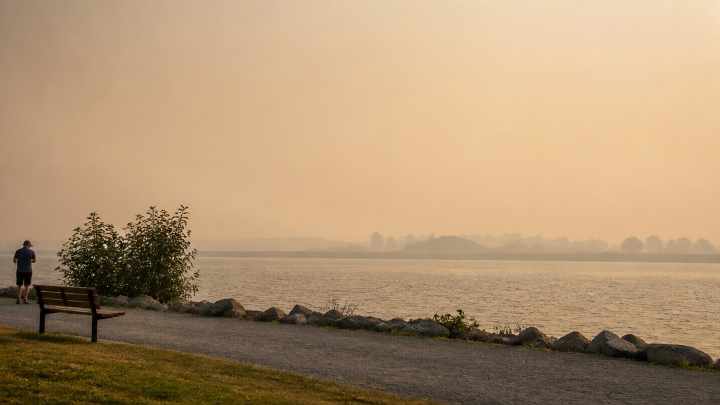
Metro Vancouver has issued a yellow air-quality warning as heat, local emissions and wildfire smoke contribute to smog across the region.

The Vancouver Police Department (VPD) has concluded its 2026 FIFA World Cup security operations after the tournament brought the single largest-ever deployment of police officers in the city’s history. Up to 1,300 officers were deployed at select locations across Metro Vancouver on each of the seven match days at BC Place Stadium, covering the stadium and surrounding security zone within and near Downtown Vancouver, the Granville Entertainment District (GED), the FIFA Fan Festival at the PNE fairgrounds in Hastings Park, team hotels, training facilities, fan marches, watch parties, Vancouver International Airport, and transportation escorts. The security operation throughout the 39-day tournament, beginning on June 11 and ending on July 19, followed four years of planning involving all three levels of government, FIFA, emergency services, transportation agencies, and police forces from across Canada and abroad. You might also like: - Granville Street Pedestrian Zone extended to September, with Christmas market possible in fall - Where Canada ranks in the FIFA World Cup final standings - American content creator agrees with everyone about Vancouver rocking as FIFA World Cup host - Total government cost of hosting FIFA World Cup in Vancouver grows to up to $729 million - Opinion: FIFA World Cup was a reminder of BC Place Stadium's enduring and irreplaceable value - Opinion: Vancouver must build on its FIFA World Cup momentum At a press conference today, VPD Deputy Chief Constable Don Chapman, the operation’s Gold Commander and co-chair of Vancouver’s Integrated Safety and Security Unit, deemed the operation a major success. “I’m extremely proud of all the members of the Vancouver Police Department, both our civilian and sworn staff, for being able to improvise, being able to adapt and to overcome all the challenges that were placed before them. I also take really great pride in the strengthening of the relationships that we have with all our other partner agencies, as well as [in developing] a whole host of new partnerships across Canada and internationally,” said Chapman. “From a safety and security perspective, my final thoughts are mission accomplished.” Not including about 490 civilian staff, VPD has approximately 1,450 sworn police officers, which is a relatively small force compared to the municipal police departments of Canada’s largest cities. This necessitated the VPD to seek the assistance of additional police officers from other departments in Metro Vancouver and elsewhere in Canada to not only meet the security requirements of the tournament, but ensure the service standards are upheld for the everyday policing and public safety needs of the city. In contrast, in Canada’s other FIFA World Cup host city of Toronto, the Toronto Police Service has over 5,300 police officers, plus 2,200 civilian members. Chapman said the deployment was roughly equivalent to having the VPD’s entire authorized officer numbers working on the FIFA World Cup operation at the same time, with additional officers brought in from other jurisdictions in Metro Vancouver and Alberta. The RCMP, Metro Vancouver Transit Police, Delta Police Department and BC Sheriff Service contributed personnel, while 40 Calgary Police Service officers were deployed before returning home for their Calgary Stampede security operations. The Calgary deployment was replaced by 40 officers from the Edmonton Police Service. Select members of a highly specialized contingent of unarmed uniformed Qatari police, with their knowledge and experience from securing the 2022 FIFA World Cup in Qatar, were also in Vancouver throughout much of the tournament period, providing advice to Canada’s domestic police forces. VPD Superintendent Jeff Neuman, who served as Deputy Gold Commander and oversaw the operational plan, said the scale and duration of the tournament created challenges the department had not previously encountered. VPD studied the security operations used for major soccer events in the United Kingdom, Scotland, and Paris — learning from how European police forces handle hooliganism — combining those lessons with local experience from the 2010 Winter Olympics, the 2011 Stanley Cup riot, the 2024 Taylor Swift concerts for the global finale of her The Eras Tour, and the approximately 1,000 protests that occur in Vancouver during a typical year. The department also had to continue responding to regular emergencies across the city during the tournament, while Vancouver experienced its busiest cruise-ship period of the year and police managed 118 demonstrations and protests. Between June 11 and July 13, VPD received 18,489 calls for service across Vancouver — an average of 560 each day. Within VPD’s District 1 geographical area, which spans the vast majority of the Downtown Vancouver peninsula, officers responded to 5,224 calls for service — averaging 158 daily. Of those, 310 were classified as Priority 1 calls (very urgent incidents) or approximately nine per day. Despite the large crowds, the number of serious incidents directly connected with FIFA World Cup locations remained relatively low. Across BC Place Stadium, the FIFA Fan Festival, the Granville Street Pedestrian Zone, and other festivities and watch parties, police recorded 40 arrests between June 11 and July 13. BC Place Stadium’s last match was on June 7. There were no criminal code arrests at BC Place Stadium, but there were three such arrests at the FIFA Fan Festival, 36 in the Granville Entertainment District, and one at another watch party. Police also opened 109 breach-of-peace files, including 99 in the Granville Entertainment District, six at FIFA Fan Festival, two at BC Place Stadium, and two at other watch parties. Another 48 files involved people intoxicated in public, including 42 in the Granville Entertainment District, three at the FIFA Fan Festival, two at BC Place Stadium, and one at another watch party. Across all FIFA-related venues, 16 foreign nationals were arrested in connection with breach-of-peace or public-intoxication files. Police escorted 16 mass fan marches to BC Place Stadium — with the largest of these matches being for the two Canada home games — and completed 312 vehicle escorts between June 11 and July 8. Those escorts included team buses travelling between hotels, training facilities and matches, as well as security details for heads of state and other internationally protected people. > Spotted some [unarmed] Qatari Police with Canada’s domestic police forces as I was leaving BC Place Stadium just now. > > They’ve been in Vancouver since 2+ weeks ago, before Qatar played against Canada. Providing security advice. #FIFAWorldCup #bcpoli #vanpoli pic.twitter.com/jwfrTLWAum > > — Kenneth Chan (@iamkennethchan) July 3, 2026 VPD cautioned that there was overlap between the breach-of-peace and public-intoxication figures, meaning some people may have been counted in both categories. The statistics should therefore not be interpreted as 197 separate people being arrested. Chapman said the criminal code cases largely involved routine allegations such as common assault or mischief, rather than unusually serious incidents. The Granville Entertainment District produced the overwhelming majority of arrests, but this was anticipated by the VPD because of the massive crowds that gathered before, during and after matches. Granville Street became a major destination for residents and international visitors, particularly after high-profile matches. “The GED numbers are higher than BC Place and Fan Fest, but we anticipated that would happen and staffed accordingly,” said Neuman. “While it was busy over a sustained period, it was largely peaceful, with average daily arrests comparable to what we see in the GED on a long weekend, especially when you factor in the number of people there on match days.” VPD is supporting the extension of the Granville Street Pedestrian Zone through Labour Day on Monday, Sept. 7, and intends to carry some of the deployment strategies developed for the FIFA World Cup into the extended summer operation. Police have not disclosed how many officers will be assigned to the area over the next seven weeks, but the department said visitors can expect a strong police presence during the day, at night and on weekends, in addition to its regular downtown deployment. To support the pedestrian zone’s additional runtime through early September, the City is providing up to $4.75 million in additional funding, including $3.5 million for the City’s direct costs. This translates into about $500,000 per week for the pedestrian zone’s seven additional weeks, including $300,000 per week for the City’s traffic management and sanitation costs and $200,000 per week for the VPD’s security operations. Drones became another major component of the operation during the FIFA World Cup. VPD made 811 drone flights between June 11 and July 13. Of those, 597 took place above the Last Mile pedestrian route along Quebec Street/Pacific Boulevard, BC Place Stadium, the Granville Entertainment District, Jack Poole Plaza, and Jonathan Rogers Park. Chapman said the aerial views allowed commanders to monitor crowd movements and make real-time changes to prevent congestion, particularly when tens of thousands of spectators were entering or leaving BC Place Stadium simultaneously. The security team led by the VPD also detected 745 unauthorized drone flights within restricted airspace on Vancouver’s seven match days. Police identified 45 operators and ordered them to land their drones and stop flying within the restricted areas. Another 40 drones were remotely jammed and removed from the sky by law enforcement. Four no-fly zones were established in the broad areas over BC Place Stadium, Hastings Park, and the training facilities at Killarney Park and the University of British Columbia. The RCMP assisted because municipal police departments do not have the federal authority required to electronically interfere with unauthorized aircraft. Police planning also accounted for the potential weaponization of drones. To support operations, it was previously shared that roughly 200 new CCTV cameras were temporarily installed in select areas around the city. This temporary surveillance system was in place from June 7 to July 19. VPD worked with the RCMP and international intelligence agencies to review a range of possible security threats. However, Chapman said police did not receive information about a credible threat directed specifically at the city. “We did look at a number of different threat-related scenarios, but nothing was specific to Vancouver or to British Columbia,” he said. Chapman also flatly denied that the FIFA World Cup security strategy included any directive to displace the homeless population from hotspot areas frequented by spectators and tourists. “There was no directive or approach to any unhoused people from anywhere in the city, period,” he said. A final accounting of the security costs is not yet available. Chapman said the total is complicated by municipal, provincial, and federal cost-sharing arrangements and outstanding invoices. He believes such costs will be publicly announced by the provincial government in Spring 2027. In late May 2027, just before the tournament kicked off, the provincial government provided an updated estimated cost figure for the tournament’s entire public costs in Vancouver — reaching a total of between $685 million and $729 million, including a contingency fund of $80 million. At the time, the total costs for security and public safety were estimated at $242 million, with the federal government covering $100 million. You might also like: - Granville Street Pedestrian Zone extended to September, with Christmas market possible in fall - Where Canada ranks in the FIFA World Cup final standings - American content creator agrees with everyone about Vancouver rocking as FIFA World Cup host - Total government cost of hosting FIFA World Cup in Vancouver grows to up to $729 million - Opinion: FIFA World Cup was a reminder of BC Place Stadium's enduring and irreplaceable value - Opinion: Vancouver must build on its FIFA World Cup momentum

Stay current with all that’s happening in the City. Sign up for our newsletter.

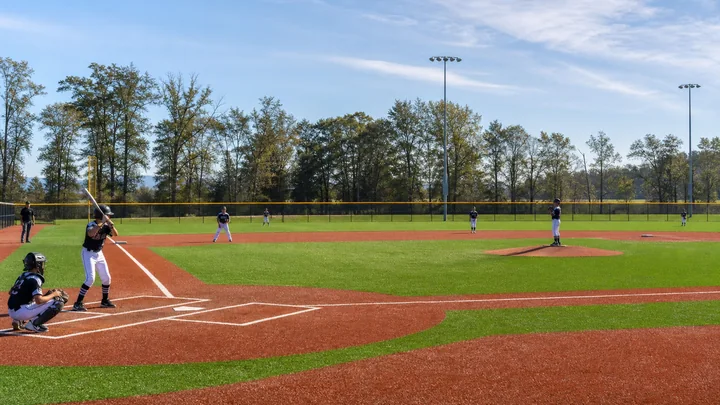
Jun 29, 2026 The City of Delta is proud to announce the completion of the new U13 and U15 baseball fields at Winskill Park, with the new community amenity now officially open for public use. The U13 and U15 baseball diamonds are a major feature of the work being done in the park as part of…

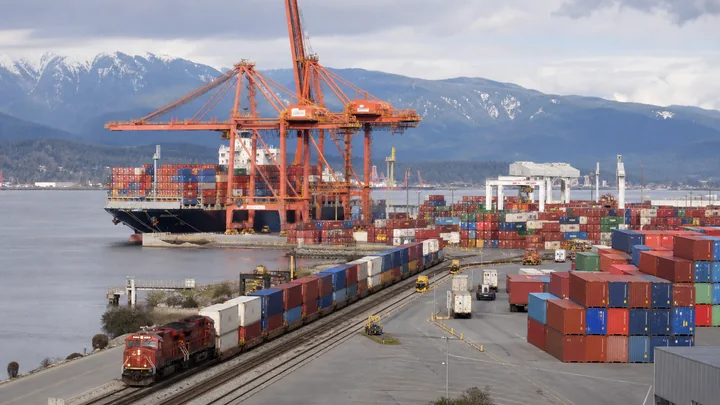
The Government of Canada is launching a broad strategy aimed at expanding the Port of Vancouver, serving to ease long-standing transportation bottlenecks and giving Canadian exporters more capacity to reach overseas markets. Federal Transport Minister Steven MacKinnon announced this week the Port of Vancouver Gateway Strategy has been referred to Prime Minister Mark Carney’s new Major Projects Office, which helps coordinate and accelerate major infrastructure proposals considered important to the national economy. The strategy covers more than a single construction project. It brings together plans for the new Roberts Bank Terminal 2 container superport project Delta, additional land for bulk-export facilities, rail network improvements, and expanded environmental protection measures. This new strategy is intended to treat the port as a connected transportation system rather than advancing individual terminals, railway projects, and environmental programs separately. You might also like: - Contractor selected to create 320 acres of land for Metro Vancouver's new superport - Federal government commits up to $3 billion for new replacement George Massey Tunnel - Massive Metro Vancouver oil terminal proposed as endpoint for new Alberta pipeline - B.C. government agrees to talks on new Alberta oil pipeline to coast, with revenue share and tanker ban - Tsawwassen First Nation seeks consultation on Alberta's proposed new oil pipeline and export terminal in Metro Vancouver - Battle over Metro Vancouver superport expansion concepts ends in surprise alliance - Burrard Inlet dredging approved to boost Vancouver port's oil tanker capacity - First Nation files court challenge against Burrard Inlet dredging project for oil tankers The work will support Carney’s goal of doubling Canadian exports to markets outside the United States by 2035, with the Port of Vancouver serving as the country’s main gateway to Asia-Pacific markets. The Roberts Bank Terminal 2 project will add a three-berth container terminal on approximately 320 acres of newly created land through an expansion of the existing causeway, which is home to the existing GCT Deltaport container terminal. This new additional container superport will increase the Port of Vancouver’s container-handling capacity by approximately 50 per cent. Upon completion in the mid-2030s, it could support more than $100 billion in additional trade capacity annually, contribute over $3 billion to Canada’s economy each year, and sustain approximately 17,000 jobs once operating. Roberts Bank Terminal 2 is also being referred to the Major Projects Office for possible designation as a project of national interest under the federal Building Canada Act. With the additional referral of the Port of Vancouver Gateway Strategy, the Major Projects Office now has a list of eight “transformative strategies” across the country, which also includes the Northwest Critical Conservation Corridor for electrical and mining infrastructure in northwestern British Columbia and southern Yukon and the Alto High-Speed Rail project between Toronto and Quebec City. In total, separately, there are 20 projects across the country referred to the Major Projects Office, with eight being B.C.-located projects. In addition to Roberts Bank Terminal 2, other major B.C. projects already referred to the office include the Red Chris Mine Expansion, the three phases of BC Hydro’s North Coast Transmission Line, LNG Canada Phase 2, Ksi Lisims LNG, and the Alberta government’s proposal to build a new West Coast crude oil pipeline from the Edmonton area to Metro Vancouver. Such a designation would not amount to immediate construction approval. However, it could place the project under a more centralized federal process, coordinating remaining permits and providing greater certainty over regulatory timelines. Existing condition: Future condition: Roberts Bank Terminal 2 completed its federal environmental assessment in 2023 and is now working toward securing its remaining permits ahead of the scheduled start of major construction work in 2028, with early works and site preparation expected to begin in 2027. Before the federal government decides whether to place the terminal on its list of national-interest projects, the Major Projects Office will consult potentially affected First Nations, including the Tsawwassen First Nation, which has its reserve and treaty lands located near the project location. In a statement reacting to this week’s announcement, Tsawwassen First Nation highlighted that they previously “consented” to Roberts Bank Terminal 2, and expect the federal government and port authority to uphold all existing approvals, legally binding conditions, and consultation obligations associated with the project. “Projects designated as being in the national interest must not come at the expense of treaty rights or existing environmental protections. While the benefits of projects like RBT2 may be shared nationally, the impacts are borne most directly by Tsawwassen First Nation in our territory and on the exercise of our Treaty-protected harvesting rights,” said Tsawwassen First Nation chief Laura Cassidy. “We expect meaningful consultation, respect for our Treaty rights, and full implementation of the commitments that have already been made to our Nation.” Earlier this month, following a year-long bidding process, Vancouver Fraser Port Authority announced the selection of the private consortium named TerraMarine as its construction partner for Roberts Bank Terminal 2’s new landmass and wharf structures. The port authority and Global Container Terminals — the operator of GCT Deltaport — have also signed a memorandum of understanding to explore a potential development and operating partnership. “As Canada’s largest port, we know we’re going to play an outsized role in delivering on Prime Minister Carney’s commitment to double exports to markets outside of North America,” said Peter Xotta, president and CEO of the Vancouver Fraser Port Authority, in a statement. “Today’s announcement will help the Port of Vancouver and our partners get game-changing projects like Roberts Bank Terminal 2 built, and move more of what Canadians make, mine, harvest and grow to more customers around the world.” The gateway strategy will also examine how more industrial land can be made available for bulk-export terminals. About 70 per cent of the cargo passing through the Port of Vancouver by weight consists of dry and liquid bulk products, including grain, potash, petroleum products, and canola oil. Federal officials say the region’s shortage of suitable industrial land has made it difficult to build modern terminals, forcing operators to rely on older facilities for longer periods. Next week, the port authority will launch a bidding process to select an operator for the 40-acre Fraser Wharves terminal property in Richmond. It would be the first major opportunity to establish a new bulk terminal at the port in approximately a decade. Rail capacity represents another major component of the federal plan. Most cargo entering or leaving the port is transported by train, but the federal government notes that sections of the railway and supply-chain network are at risk of becoming increasingly congested. Such congestion can delay shipments, raise transportation costs, and make Canadian exports less competitive. Transport Canada and the Major Projects Office will work with railway companies and other industry organizations on a strategy to expand physical infrastructure and improve how trains and cargo move through the wider port system. Environmental measures form another part of the gateway strategy. The federal government has committed more than $258 million over five years to whale protection programs, including $95 million over five years and $16.5 million annually for measures focused on Southern Resident killer whales. The work is expected to include vessel speed restrictions, fisheries management, underwater noise monitoring, whale detection systems, and the testing of quieter technologies for commercial ships and B.C. Ferries vessels. The federal government has also set aside $413 million over five years to renew the Pacific Salmon Strategy Initiative, which supports habitat restoration, scientific monitoring, and the recovery of wild salmon populations. These programs are in addition to the federal government’s $3.5-billion Oceans Protection Plan. “Canada needs modern transportation infrastructure that helps our businesses compete, gets Canadian goods to new markets, and creates good jobs across the country. By investing in our ports and transportation network, we are growing our economy, strengthening our supply chains, while protecting the environment,” said Steven MacKinnon, the federal Minister of Transport. The Port of Vancouver currently handles approximately $1 billion worth of goods each day and about 40 per cent of Canada’s international merchandise trade outside North America. Its terminals connect Canadian exporters and importers with as many as 170 countries. In 2025, the port handled a record 170.4 million metric tonnes of cargo, eight per cent more than the previous record set one year earlier. Port-related activity contributes an estimated $16.3 billion annually to Canada’s GDP and supports more than 132,000 jobs nationwide, including approximately 103,000 in British Columbia. All of this follows the Canada-British Columbia Cooperative Prosperity Agreement announced early this month, which included a broader commitment to improve B.C.’s ports and transportation corridors — including up to $3 billion in federal funding for the new replacement George Massey Tunnel project, covering up to one-third of the overall project costs — as Canada seeks to increase trade with countries beyond the United States. The gateway strategy will also consider Alberta’s proposed West Coast crude oil pipeline, which would also terminate at a major new oil storage and export facility at Roberts Bank — potentially double the size of the new container terminal, and also incorporating a brand-new additional causeway for the area. Few details about the potential pipeline route or terminal were included in the announcement, with the proposal remaining subject to further review and consultation. You might also like: - Contractor selected to create 320 acres of land for Metro Vancouver's new superport - Federal government commits up to $3 billion for new replacement George Massey Tunnel - Massive Metro Vancouver oil terminal proposed as endpoint for new Alberta pipeline - B.C. government agrees to talks on new Alberta oil pipeline to coast, with revenue share and tanker ban - Tsawwassen First Nation seeks consultation on Alberta's proposed new oil pipeline and export terminal in Metro Vancouver - Battle over Metro Vancouver superport expansion concepts ends in surprise alliance - Burrard Inlet dredging approved to boost Vancouver port's oil tanker capacity - First Nation files court challenge against Burrard Inlet dredging project for oil tankers

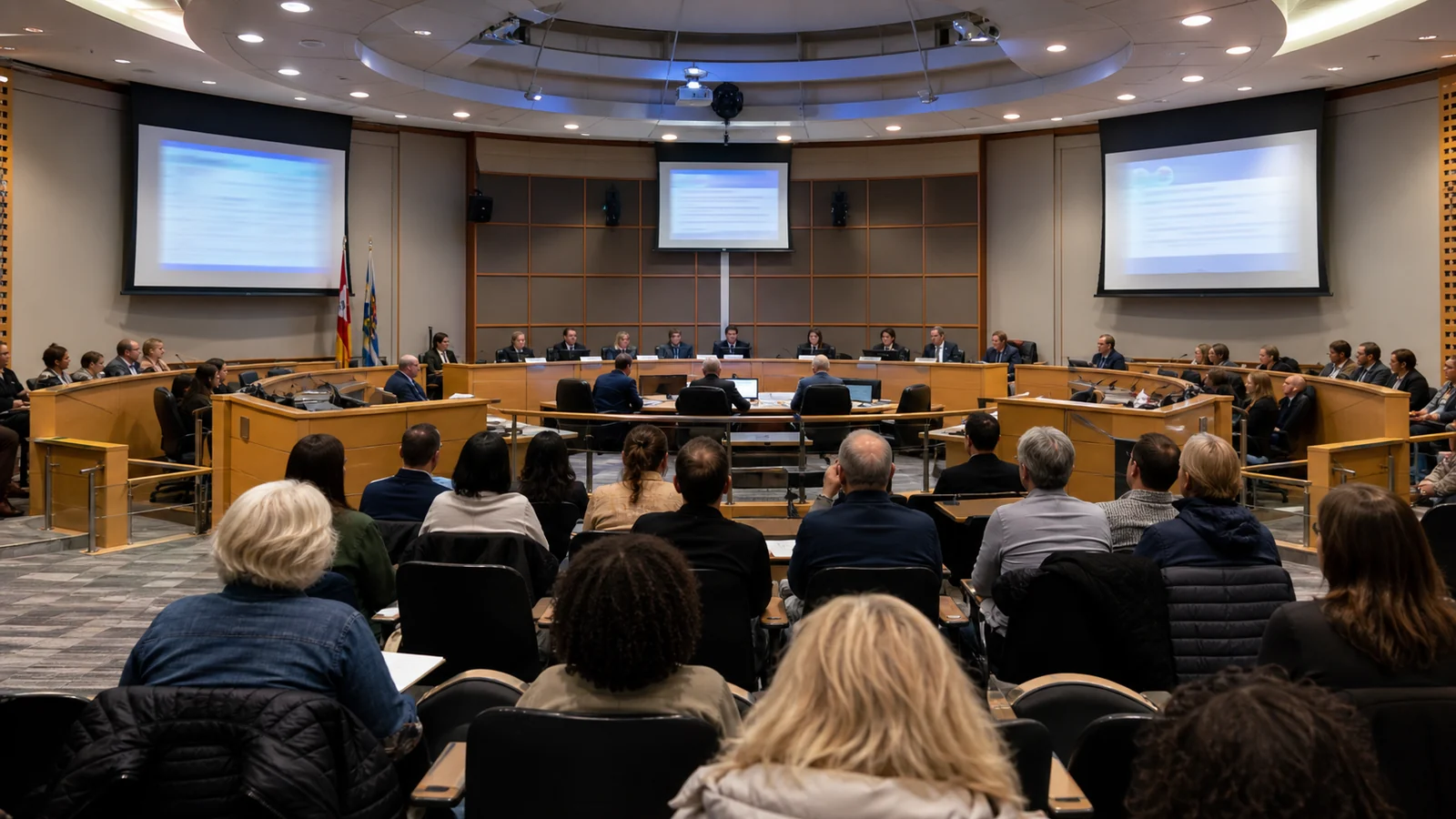
Jul 9, 2026 Regular Council Meeting City Hall 7:00 p.m. Agenda
Stay current with all that’s happening in the City. Sign up for our newsletter.

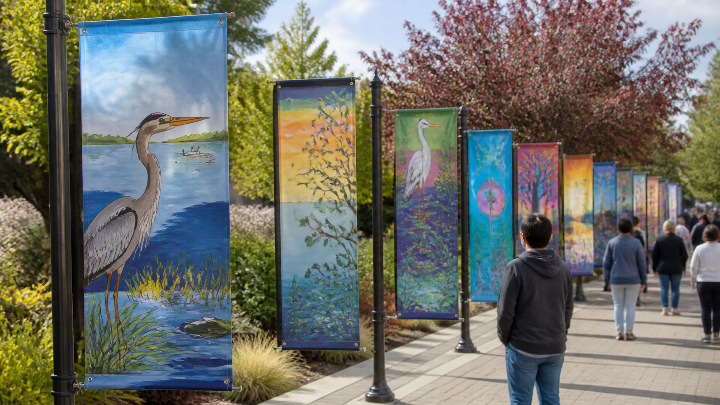
Delta council recognized the winners of its 2026 Community Banner Contest on July 13. Their designs will be displayed on city streets from late July through October.

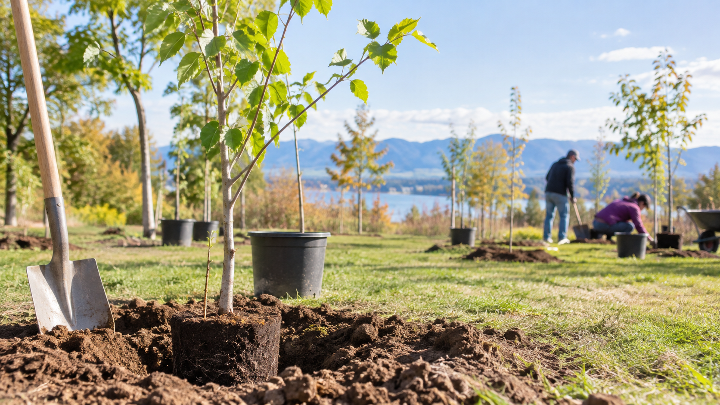
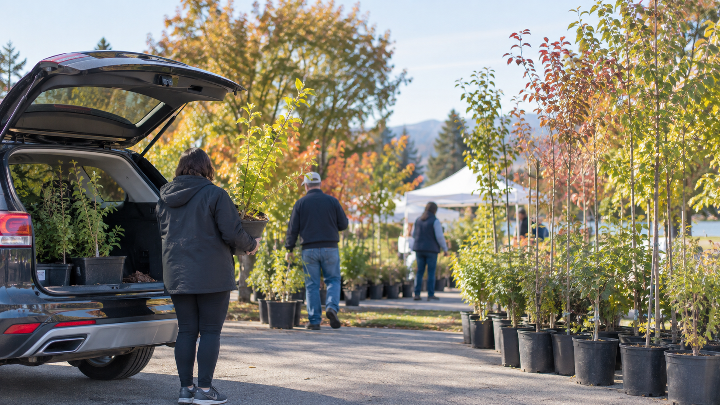
Delta is offering 250 free trees through its Planting Our Roots project. Each household may submit one entry by Thursday, September 24, at 11:59 p.m.; previous recipients from the program’s last two seasons are ineligible.

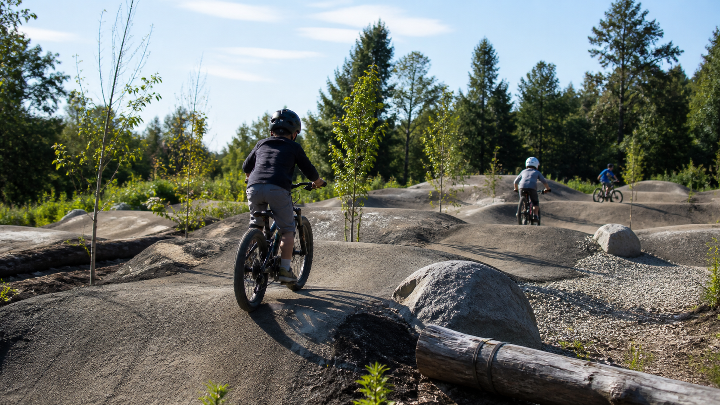
Delta’s new Kensington Bike Park is now open daily from dawn to dusk, offering a pump track, dirt jumps for four skill levels and accessible access from the parking lot.

Delta’s Planting Our Roots free tree project is returning for a third fall season. Since launching in 2024, it has distributed more than 1,250 trees. Eligible households can enter for a chance to receive one of 250 trees.
More to discover in Yo! Vancouver